




Born in Detroit’s industrial ruins, techno turned crisis into rhythm and hope, blending human emotion with machine precision. From underground parties to global stages, it became the soundtrack of generations imagining a different future.
Techno: Rhythm from Industrial Ruins
I. Introduction: Where Technology, Disaster, and Hope Intersect
There are not many musical genres in the world that have been able to radically change the dance scene, influence entire movements, and shape the direction of whole generations. One such genre—our hero today—is techno. I want to approach it from an unusual angle: how crisis and cultural hunger helped this sound grow into a national treasure in Germany. What do migrants, unemployment, and police raids have to do with it? More on that later. First, let’s define what techno is and where the name comes from.
At first glance, everything seems simple. The genre consists of repetitive beats, cyclical rhythms, and machine-like sounds. But if you listen more closely, it becomes clear that techno is more than music—it is a philosophy encoded in rhythm. Its atmosphere is cold and precise, like the work of a press machine or a conveyor line in a factory. Yet behind this mechanical precision lies a dream of stability, development, and a future in which technology helps people rather than replaces them.
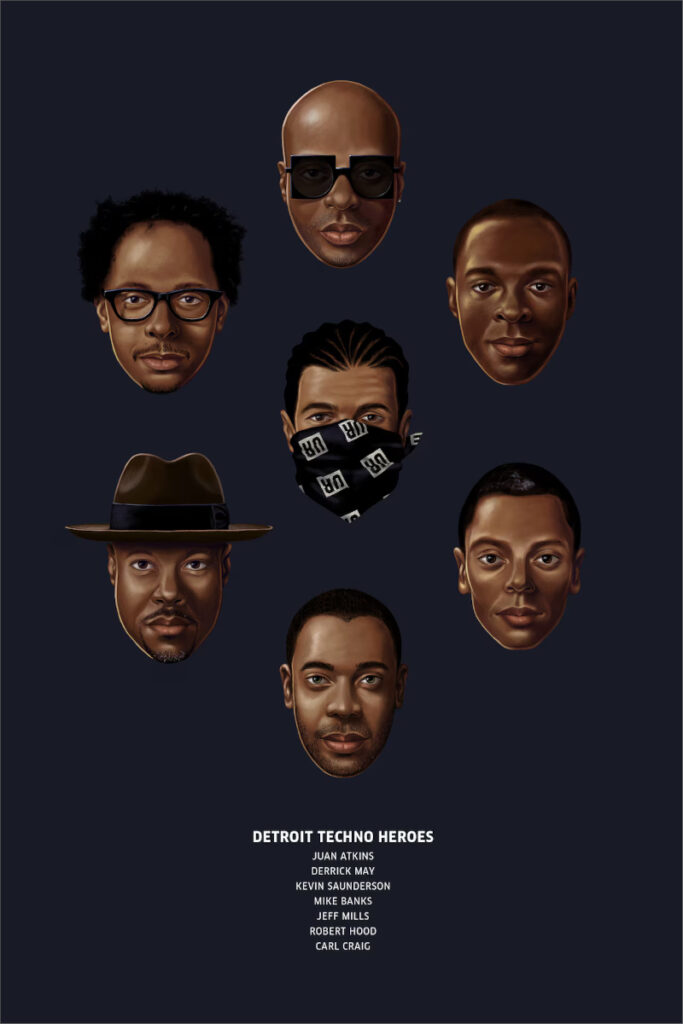
The history of the name itself is also noteworthy. The term “techno” first appeared in Detroit (Michigan, USA) in the mid-1980s. It was introduced by Juan Atkins, one of the pioneers of the genre, inspired by futurism and Alvin Toffler’s book The Third Wave. He decided to call the music that combined machine sound with hope for a new world techno. Soon after, together with Derrick May and Kevin Saunderson, he formed the legendary The Belleville Three in 1981, a creative collective that turned the industrial ruins of once-prosperous Detroit into a musical laboratory of the future.
Detroit in the late 1980s resembled a city where time had stopped: closed factories, rising unemployment, and empty neighborhoods turning into ghettos. Hope was slowly disappearing from the streets. But it was in this emptiness that a new sound was born—music that turned decline into strength and despair into hope. Roland synthesizers and TR-808 and TR-909 drum machines became the tools and weapons of the first producers. In garages, basements, and abandoned workshops, a rhythm emerged that was destined to spread around the world.
To understand why Detroit became the cradle of the genre, we need to look at the social background and atmosphere of the city in the 1970s and 1980s. Until recently, Detroit had been the capital of the American auto industry: Ford, GM, and Chrysler—three industrial giants that earned it the nickname Motor City. It’s hard to say exactly when the decline began. My goal here is not to analyze the political or economic details, but to show the larger picture in which the genre was born and developed.
By the end of the 1970s, Detroit was hit by deindustrialization: the largest factories moved production to Mexico and Asia, where labor was cheaper. Those that remained introduced automation and robots, displacing workers. As a result, tens of thousands of city residents lost their jobs. In the early 1980s, unemployment in Detroit and Michigan as a whole reached 20–25% in some areas—one of the worst rates in the country.
The economic collapse led to depopulation. People left the city en masse, especially white families, in a phenomenon known as white flight. Detroit was left mainly with African American neighborhoods, where unemployment and poverty reached critical levels. The streets were filled with abandoned houses, empty workshops of once-bustling factories, and closed stores. Detroit was rapidly turning into post-apocalyptic ruins.
Social tensions in the city had existed since the second half of the 1960s. After the 1967 race riots, Detroit lived in an atmosphere of conflict—poverty, crime, and police pressure. Young people grew up with a sense of having no future and no prospects. And it is in such conditions, as history has shown many times, that the need arises for a new cultural language—something that can express the gravity of the times and at the same time offer the dream of a different tomorrow.
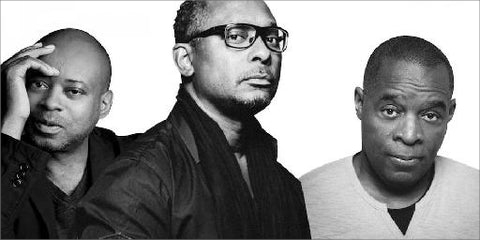
Against this backdrop, a sound emerged in which mechanics spoke with the voice of the streets. The Belleville Three turned synthesizers and drum machines not just into musical instruments but into a reflection of the industrial environment: the factories fell silent, and their place was taken by a repetitive, cold electronic rhythm. If Chicago house sounded like an endless party, Detroit techno was harsh, mechanistic, and post-industrial. It conveyed not only hope for the future but also longing for a prosperous past.
For the youth of Detroit, techno became a kind of utopia on the ruins. When it was impossible to escape or change one’s life through career or education, there remained an imaginary escape through music, art, and dreams of a better future. That is why techno is so closely linked to futurism: it was not just a dance genre but a music of survival—music of the future, written amid the ruins of the present.
To sum up, it is safe to say that techno cannot be viewed merely as dance music or as a simple musical genre. It grew out of a specific time and place, shaped by crisis and social tension, becoming something more than just a set of rhythms. For Detroit, it was a breath of fresh air; for young people, it was a chance to express themselves and invent their own language of the future, which would later conquer the world and become national. In this article, I want to show techno not only as the soundtrack to nightclubs and raves but as the cultural code of an entire generation. It is music that reflects social shifts, political upheavals, and human dreams and struggles. And that is precisely why the genre successfully went beyond Detroit and became a global phenomenon.
II. Precursors: Musical and Cultural Foundations
As trite as it may sound, techno did not come out of nowhere. It is the result of a long process of cultural, musical, and technological development that ultimately created a unique musical code. The genre is rooted in African American traditions: it inherited rhythm and groove from funk, improvisation and polyrhythm from jazz, emotional expressiveness and melodiousness from soul, and clarity of arrangement—along with an emphasis on bass and drums—from Motown. These elements gave techno its rhythmic rigor, sense of groove, and room for variation.
The European avant-garde, represented by krautrock bands and electronic groups such as Kraftwerk and Neu! from Düsseldorf, added minimalism, precision, and a cold, machine-like aesthetic. At the intersection of human creativity and sonic experimentation, a recognizable standard for the genre gradually emerged.
Before this standard appeared, techno underwent many experiments. In the 1970s and 1980s, musicians tried to combine psychedelia, minimalism, noise collages, and early ambient. These experiments were not always successful, but over time, the excess fell away, leaving behind repetitiveness, textural purity, and rhythmic rigidity—the foundation of the techno we know today.
The first releases could hardly be called full-fledged albums; they were demos, drafts, and pirate recordings distributed on a DIY (do-it-yourself) basis. Cassettes, underground studios, and parties became the main channels of distribution. Radio stations with independent DJs—especially the cult show The Electrifying Mojo in Detroit—gave listeners access to experimental electronic music, which coexisted with funk, soul, and European minimalism. This scene developed in parallel with mainstream genres such as disco, pop, and rock, and often remained misunderstood by major labels and mainstream radio. However, local clubs and independent stations created the first communities and laid the groundwork for the future movement.
Techno developed almost simultaneously with the British drum and bass scene, which is important for understanding the socio-cultural context. In both cases, the emergence of the genre was influenced by crisis, cultural deprivation, and difficult social conditions. Drum and bass was born in Britain within migrant communities—Jamaican, Indian, Pakistani—who wove reggae, dub, and African rhythms into a new sound, turning a local experiment into a national phenomenon. Techno, on the other hand, was born in Detroit, emerging from African American traditions and the local industrial environment. If drum and bass became the voice of “outsiders who became insiders,” techno was “its own sound” from the very beginning—music created among factories, ruins, and dreams of a better future.
Ultimately, the formation of techno was the result of a complex fusion: African American rhythmic heritage, European electronic aesthetics, bold experiments with texture and minimalism, DIY distribution, and the unique urban environment of Detroit. This is how the recognizable sound emerged—cyclical, cold, and minimalistic, yet emotional and conceptually rich. Techno became not just dance music for raves but the language of an entire era, a reflection of the cultural and social processes of its time.
III. Detroit: The Formation of Sound and Identity
The history of techno begins with three friends from the suburbs of Detroit, known today as The Belleville Three. Juan Atkins, Derrick May, and Kevin Saunderson met at Belleville High School in the late 1970s. Inspired by African American music, the radio show The Electrifying Mojo, and European electronic avant-garde, they began experimenting with synthesizers and drum machines, seeking to create an entirely new sound.
“Detroit was the forge of it all: Atkins, May, and Saunderson weren’t just making tracks, they were imagining a tomorrow that didn’t exist yet. Underground Resistance turned that vision into a manifesto.”
— Alessandro Ciuffetti, Audio Mastering Engineer (Italy)
Juan Atkins, often called the godfather of techno, became the theorist of the movement. Drawing on Toffler’s The Third Wave, he was the first to apply the term techno to music. His duo Cybotron, with Richard Davis, released Alleys of Your Mind in 1981—an early signal of a new genre. Their 1983 single Clear became one of the first true techno tracks, foreshadowing the music’s future direction.
Atkins later founded Metroplex, releasing influential works under the alias Model 500, including No UFO’s (1985), often considered “the birth of techno,” along with Night Drive, Sound of Stereo, Interference, and The Chase. His output set the blueprint for the genre’s sound and aesthetic.
Derrick May brought emotion and depth into the music. His iconic release Strings of Life (1987) on his label Transmat became an anthem, combining mechanical rhythm with dramatic melody. May viewed techno not as cold or soulless but as an emotional expression of a new generation.
Kevin Saunderson served as the bridge between techno and house. His project Inner City—particularly the hit Big Fun (1988)—brought Detroit’s sound to international charts. In 1987, he founded KMS Records, which helped early producers release their work and contributed to the formation of a local industry. His business-minded approach helped push techno beyond the underground.
By the late 1980s, Detroit techno had an established community. In 1988, the British label Virgin Records released the compilation Techno! The New Dance Sound of Detroit, the first major industry recognition of the term. The compilation introduced the Detroit sound to European audiences and helped spark its global expansion.

Local venues were equally important in shaping the movement. The Music Institute, which opened in 1988, became the center of Detroit’s techno scene. With its minimalist interior and powerful sound system, it offered an intimate yet intense environment where Derrick May, Kevin Saunderson, Chez Damier, and others shaped the identity of the genre. The iconic Shelter, located beneath St. Andrew’s Hall, blended techno and hip-hop scenes, attracting diverse crowds and fostering cross-cultural exchange.
Underground parties in abandoned factories and warehouses also played a key role. Organized through phone calls, word of mouth, and cassette mixes, they embodied Detroit’s DIY spirit. Early raves in the Wagon Wheel Warehouse, Eastern Market lofts, and the Packard Automotive Plant became legendary, laying the groundwork for Detroit’s rave culture even before techno fully took shape.
In the early 1990s, Underground Resistance (UR)—founded by Jeff Mills and “Mad” Mike Banks and co-founded by Robert Hood—added a political dimension to the sound. Rejecting commercialization, performing in masks, and releasing explicitly political music, UR transformed techno into a platform for resistance, echoing the messages of hip-hop groups like Public Enemy and N.W.A. They reinforced techno’s role not just as music but as a form of social expression.
Thus, techno in Detroit emerged not merely as a collection of rhythms but as a cultural phenomenon shaped by urban decay, crisis, and hope. The Belleville Three created its emotional, theoretical, and commercial foundation. Early tracks like Clear and Strings of Life, labels such as Metroplex, Transmat, and KMS, iconic venues, and the urgency of UR all helped build the aesthetic and ideological framework of a genre that still defines techno today.
IV. The Road to Europe: Exchange, Adaptation, and the Birth of Berlin Techno
In the early 1990s, Detroit techno began spreading rapidly across Europe through record exchanges, tours, and licensing deals. Detroit pioneers built early ties with British and German DJs, marking the beginning of the genre’s global expansion.
In the UK, techno encountered a vibrant context shaped by acid house and the massive raves of the late 1980s. These events emphasized energy and scale, though often without the philosophical underpinnings central to Detroit’s vision. By 1988–1989, British labels were producing compilations of Detroit tracks, and DJs played original releases from Metroplex, Transmat, and KMS at parties in London, Manchester, and Birmingham.
On the European continent, the Netherlands and Belgium embraced the Detroit sound and pushed it toward more aggressive forms. This experimentation laid the foundation for hardcore and gabber, particularly in Rotterdam and Antwerp. Belgian labels such as Antler-Subway and R&S Records—home to artists like CJ Bolland and Joey Beltram—played pivotal roles in shaping the scene. Rotterdam’s Pompe, Antwerp’s underground lofts, and labels like Rotterdam Records and Mokum became key nodes in a growing network of underground raves and DIY culture.
“When I started DJing in 1989, techno was a mish-mash on the dancefloor—hip-hop, house, European rave, Detroit stuff. From that mix grew the global scene we know today.”
— Pierre Jerksten (Hertz), DJ & Producer, Sweden

Germany—and especially Berlin—became the beating heart of techno’s European evolution. The fall of the Berlin Wall in November 1989 created a unique cultural landscape: abandoned buildings, political freedom, and a generation eager to redefine identity. Empty factories and warehouses became ideal spaces for clubs and experimental art, blending Detroit’s futurism with European minimalism and industrial aesthetics.
Berlin’s most important institutions emerged during this period. Tresor, opened in 1991 in the vault of a former department store, became a magnet for both American and European DJs. Jeff Mills, Carl Craig, and Richie Hawtin (Plastikman / Plus 8 Records) played there early in their careers, forging a link between Detroit and Berlin. The record store and label Hard Wax, founded by Mark Ernestus, served as the community’s central hub—part archive, part meeting point, part creative laboratory. Beginning in 1993, projects like Basic Channel developed a minimalist, dub-infused sound that shaped the city’s identity.
Major European figures such as Sven Väth, Westbam, Laurent Garnier, and Ellen Allien helped popularize the genre across the continent. Meanwhile, the Love Parade, which began in 1989 with only 150 participants, soon became one of Europe’s largest cultural events, symbolizing unity and freedom through electronic music.
Berlin’s underground parties played an equally crucial role. Held in abandoned factories, basements, and improvised spaces, they cultivated a raw, spontaneous aesthetic. Events in the Börse Berlin building (1988–1989), Kreuzberg warehouses, and early venues on Köpenicker Straße helped establish the city’s now-iconic club culture. Police raids were frequent, but they only reinforced solidarity within the scene.
Across the Netherlands, Belgium, and Germany, underground rave culture took root through shared records, small local labels, and informal networks. Music became not only entertainment but also a symbol of identity, protest, and freedom.
Detroit’s export to Europe was therefore not a simple spread of sound but a cultural exchange—a process of adaptation, reinterpretation, and reinvention. Berlin, with its industrial ruins and liberated spirit, became the new capital of techno, shaping the genre’s global trajectory for decades to come.
V. From the Underground to the Global Stage
The 1990s marked the transformation of techno from a local underground movement into a global phenomenon. A full-fledged industry emerged around it: festivals, radio shows, magazines, and labels. In Germany, the magazine Frontpage became the first major publication to systematically document the electronic scene. Radio stations began broadcasting club mixes, exposing new listeners to the sound that had originated in Detroit’s basements and abandoned factories.
Subgenres quickly developed, each reflecting different creative directions.
Minimal techno reacted against rave excess with reduction, precision, and hypnotic rhythm.
Hard techno emphasized speed, compression, and distortion, creating a physical, almost metallic impact.
Melodic techno and tech-house integrated vocals, harmonies, and softer textures, moving closer to house while maintaining techno’s structural discipline.
Two generations of producers shaped the genre. The old school relied on analog machines—TR-909s, TB-303s, SH-101s—recording live with little editing. The resulting sound was warm, raw, and often imperfect. The new school embraced digital production—Ableton, Logic, VSTs—making high-quality tracks possible from home studios. The internet democratized access, allowing artists to share their work on Bandcamp, SoundCloud, and later on mainstream streaming platforms.
Sound aesthetics also evolved. The rough analog mixes of the 1990s gave way to cleaner, more spacious production. Techniques like sidechain compression, filter automation, and mid/side EQ allowed producers to create immersive soundscapes, turning techno into a three-dimensional experience.
Key figures such as Ben Klock and Marcel Dettmann defined the 21st-century Berlin sound—dense, monochromatic, and circular. Nina Kraviz introduced psychedelic and post-Soviet elements, bringing emotional unpredictability into minimalist frameworks. Amelie Lens and Charlotte de Witte pushed hard techno to global festival stages, combining aggressive energy with modern production clarity.
Major labels became pillars of influence:
- Ostgut Ton shaped Berlin’s distinct sonic identity.
- Drumcode became synonymous with festival-ready techno.
- Afterlife blended melodic techno with striking visual worlds.
- Lobster Theremin preserved DIY authenticity and experimentalism.
These developments flowed into festivals such as Awakenings, Time Warp, Dekmantel, Melt!, and Sónar, where sound, visuals, and architecture merged into immersive experiences. Meanwhile, platforms like Boiler Room and YouTube made techno global—no longer confined to basements, but accessible to millions.
Success, however, brought controversy. Old-school producers argued that techno was losing its rawness and ideology, becoming polished entertainment. Younger artists saw globalization as liberation—freedom to experiment, blend genres, and work without traditional gatekeepers. This tension between underground values and global expansion continues to fuel the scene’s evolution.
Today, techno is both a musical genre and a global cultural ecosystem. Producers combine analog gear with digital tools, exploring new sonic spaces. Visuals, immersive technologies, and online communities expand its reach. Artificial intelligence, VR and AR environments, and hybrid performance formats are shaping its future, merging sound, visuals, and interactivity.
Despite all transformations, techno retains its core spirit: freedom, experimentation, and the desire to imagine a different world. The dialogue between old and new schools keeps the culture alive, dynamic, and forward-looking. Techno today is both global and deeply personal—a bridge between past and future, a culture that unites people through rhythm, space, and light.
And perhaps in this endless process of reinvention lies the true magic and enduring power of the genre.
Detroit Techno Heroes image courtesy of Redbull Music Academy.
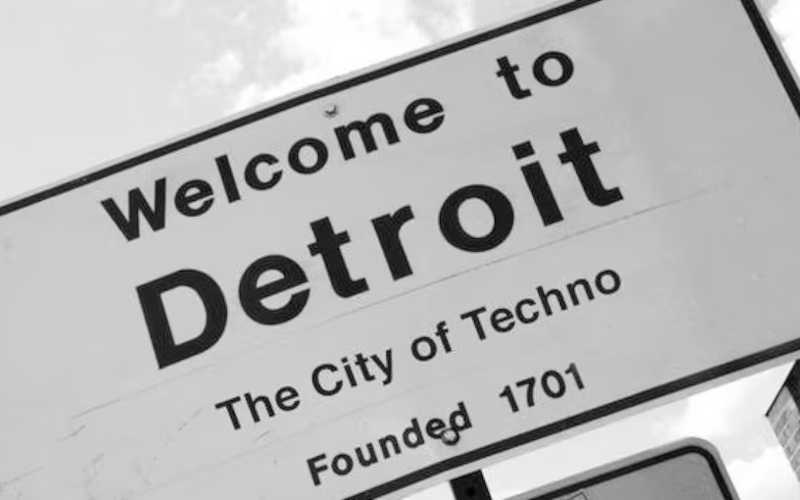
Detroit Techno City image courtesy of Techno Live Sets.