

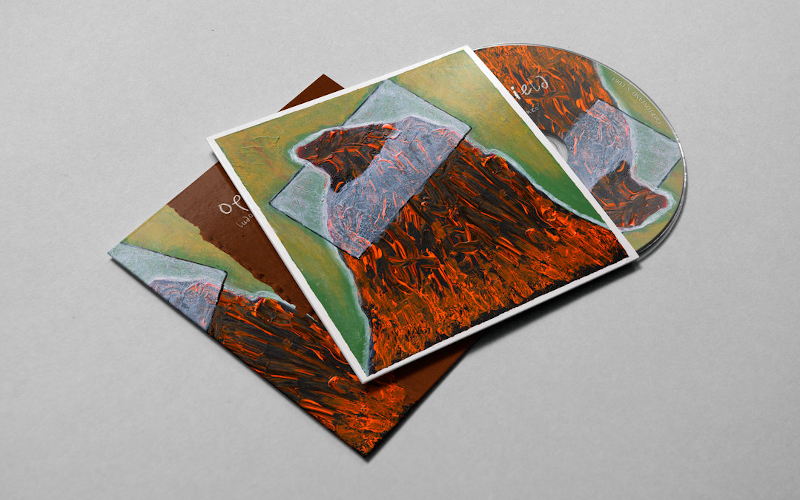
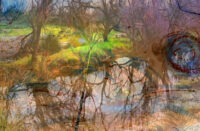
Ludovico Franco’s Open Field (ROHS!) is a seven-part ambient work blending field recordings, improvisation, and electronics. Inspired by James Tenney, it was recorded outdoors with musicians and audience sharing the space. The result is a series of immersive soundscapes that feel more like living environments than compositions.
For half an hour, the listener can roam and explore
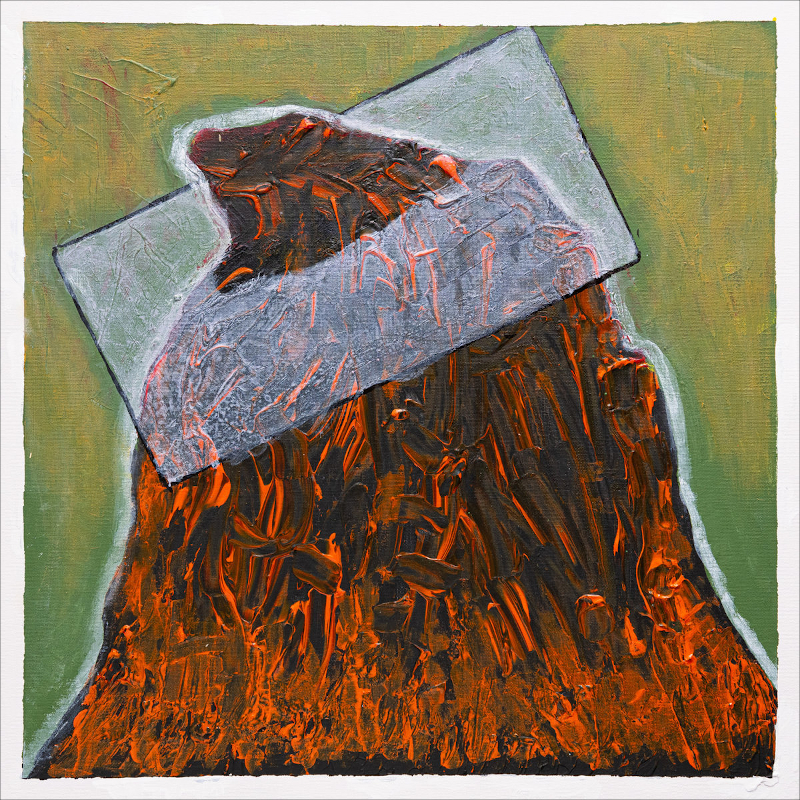
Ludovico Franco’s new album (Open Field) on ROHS! Lontano Series, is a sequence of seven landscapes composed of field recordings, improvisations and electronics. The pieces stem from open-air performances inspired by James Tenney’s “In a large, open space:” in Tenney’s piece, a dozen (or more) players of any sustaining instrument are evenly distributed in space, to play one of a set of tones for 30–60 seconds before choosing a second tone. The audience is free to roam among the players. This also happened during the recording of Open Field, when 12 musicians stood in a large circle in a field with the audience moving around them, before subjecting the recordings to electronic editing, stratification and remixing.
The seven movements of Open Field were performed in conjunction with umwelten – ambienti, an outdoor exhibition on the concept of “environment” held in late 2024 in Rome and curated by Valeria De Siero, and they focus largely on sustained tones, with brass instruments, electronic drones/glitches and nature recordings intertwining in pieces that are static from a birds-eye view, but constantly moving in the here-and-now. Describing them as environments is fitting, and gives a good idea of their atmospheric expanse and of the events happening within them: midway through movement “III,” a brass plays two ascending notes in the distance, like the howl of a dog in a valley, and a few seconds later, just as distant from the listener, a motorcycle accelerates with its own ascending tones. Bird songs and sounds of people walking through grass are heard all over the album, on top of the half-analogue half-digital drones.
“Life itself, in all its variety and complexity.”
These elements don’t disturb the ecology of the improvisations, but they become part of it, echoing Tenney’s idea of the “open field” where music happens as “life itself, in all its variety and complexity” (as explained in the 1983 essay John Cage and the Theory of Harmony. The field then does not just include music, but everything that the ears can reach: as Cage wrote in a letter to music critic Paul Henry Lang, “We live in a world where there are things as well as people. Trees, stones, water, everything is expressive … I attempt to let sounds be themselves in a space of time.”
Open Field defies easy characterization: it would be too easy to hear it just as electroacoustic or improvisational music, or as ambient (although the etymology of the latter would be a perfect description). Instead, it focusses all its strength on conjuring a sense of place as complex and nuanced as possible, a virtual but realistic space where, for half an hour, the listener can roam and explore.
Open Field is available on Lᴏɴᴛᴀɴᴏ Series/ROHS!. [Bandcamp]