



ITERAE belongs firmly in the latter category. It is immersive, challenging, elegant, and deeply rewarding. Joseph Branciforte and Jozef Dumoulin have created something rare: a work of experimentation that feels both intellectually rigorous and emotionally resonant. It is simply one of the best releases of the year. It is one of those recordings that reminds you why you listen in the first place.
Fragmented tones suddenly resolve into luminous harmonic convergence
Some albums reveal themselves gradually. Others announce their significance almost immediately. ITERAE, the remarkable collaboration between Joseph Branciforte and Jozef Dumoulin, somehow does both. From its opening moments, there is a sense that something rare is unfolding, a meeting of minds and methods so fully realized that it feels inevitable, despite the fact that this recording documents their very first musical encounter. By the time its seventy-minute arc reaches its close, ITERAE stands not only as one of the most adventurous and rewarding releases of the year, but perhaps my favorite. It is a must-hear work of extraordinary focus, imagination, and depth.

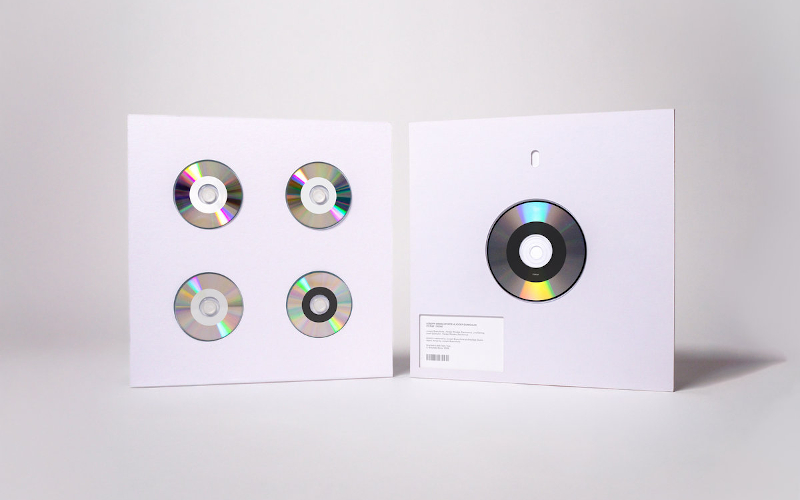
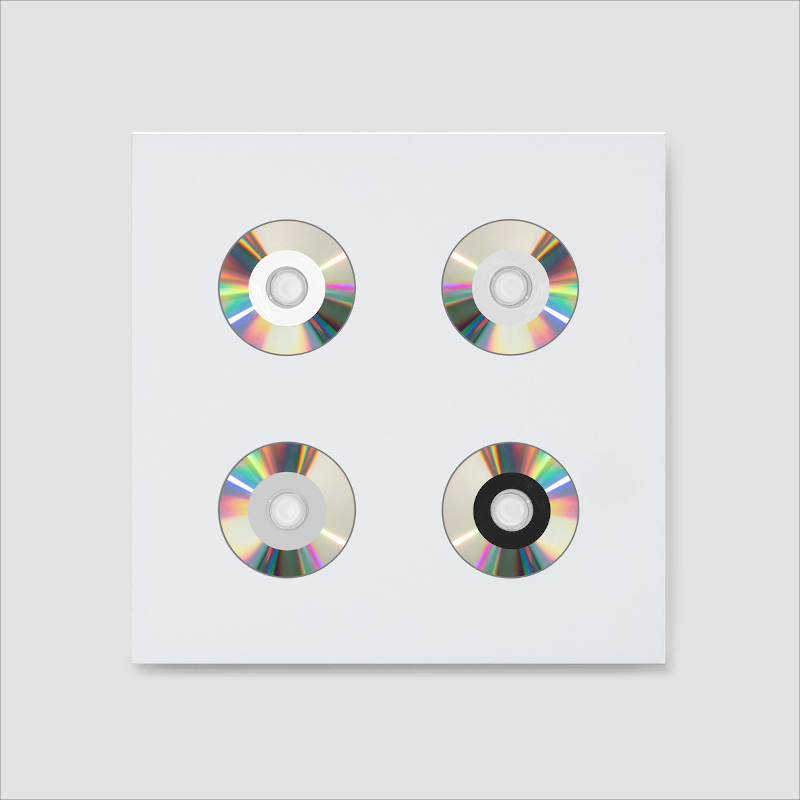
Released by greyfade in one of the label’s most conceptually elegant physical editions to date, ITERAE is as much an object of thought as it is an album. Its music is distributed across four 80mm compact discs, paired movements arranged as discrete but interconnected forms, alongside a full-sized CD for continuous playback. The format reflects the music’s recursive logic, allowing each section to exist independently or as part of a larger whole. Like much of greyfade’s catalog, the physical presentation is not decorative but integral, extending the compositional philosophy into space and form. It is a beautiful reminder that listening can be both sonic and tactile.
Fragments are seized mid-flight, transformed into lattice-like structures, repeated, refracted, and folded back into the improvisation. It creates an astonishing dialogue between immediacy and architecture, where improvisation and composition are not opposing forces but active collaborators. There are albums you admire, and albums you return to because they alter your perception. ~ Don Haugen
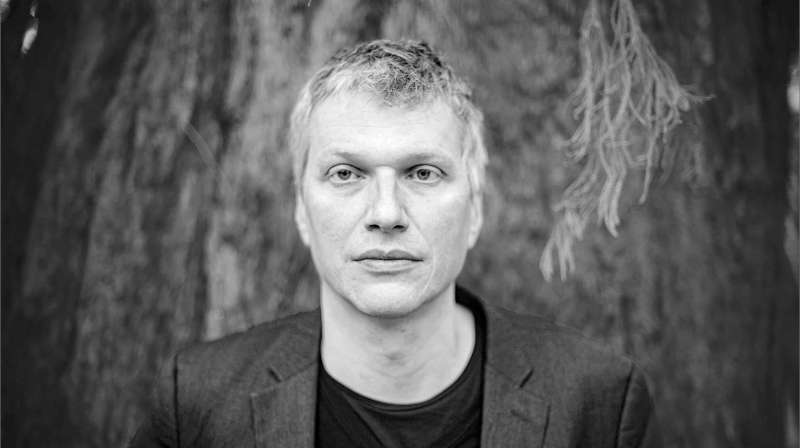
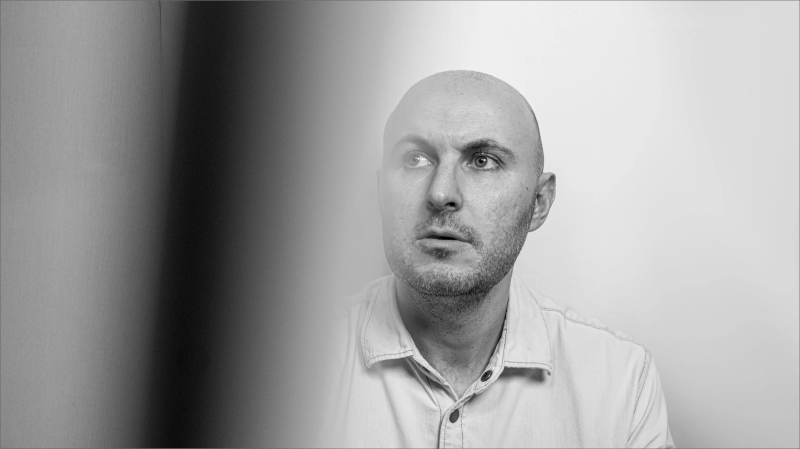
At the center of the project are two artists who have profoundly expanded the possibilities of the Fender Rhodes electric piano. Belgian keyboardist Jozef Dumoulin has spent years redefining the instrument as something far beyond its familiar jazz lineage, using extensive electronic manipulation to create a language that is fluid, spectral, and often startlingly abstract. Joseph Branciforte, composer, producer, and conceptual architect, brings a similarly boundary-pushing sensibility, shaped through collaborations with Theo Bleckmann, Taylor Deupree, and Ryuichi Sakamoto. Both artists move fluidly between jazz, electroacoustic composition, ambient music, and contemporary classical forms, but ITERAE feels less like a fusion of genres and more like the emergence of a new vocabulary.
Recorded over two days at greyfade studio in New York, the album centers around two separate Rhodes pianos, each processed through the artists’ individual arrays of effects and transformations. Yet the true revelation lies in Branciforte’s custom live editing system, software designed to capture, reshape, and reconfigure both performers’ outputs in real time. Fragments are seized mid-flight, transformed into lattice-like structures, repeated, refracted, and folded back into the improvisation. It creates an astonishing dialogue between immediacy and architecture, where improvisation and composition are not opposing forces but active collaborators.
This is where ITERAE becomes exceptional. The album hovers in a liminal space between precision and dream logic. Glitch textures recall the early days of microsound and digital minimalism, but they are never used as aesthetic shorthand. Instead, they function as part of a living harmonic system. Tiny clicks and stutters bloom into melodic suggestion. Dense clusters of fragmented tones suddenly resolve into luminous harmonic convergence. There are moments where the music feels almost architectural in its precision, followed by passages that drift with the intuitive softness of ambient improvisation.
Across its eight continuous sections, the music unfolds with remarkable patience. Branciforte has noted that he usually favors concision, but here the larger canvas feels necessary. Ideas need time to breathe, recur, and evolve. Motifs appear, dissolve, and return in altered form. Listening becomes less about progression and more about inhabiting a shifting ecosystem of sound. There is no excess here, only deliberate expansion. Every texture feels placed with intention.
Ideas need time to breathe, recur, and evolve ::
What I appreciate most is the refusal to settle into comfort. ITERAE is experimental in the truest sense, not because it seeks novelty, but because it trusts uncertainty. It asks the listener to stay present, to follow subtle transformations, to hear structure inside apparent abstraction. It rewards deep listening in the same way the best electroacoustic works do, but it also carries an emotional warmth that prevents it from becoming purely cerebral. There is beauty in the restraint, and humanity in the details.
Dumoulin’s touch is especially striking throughout. Even under layers of processing, there is a physicality to his playing, a sensitivity to resonance and phrasing that keeps the Rhodes grounded as an expressive instrument rather than a sound source alone. Branciforte’s role as editor and co-performer is equally masterful. His interventions never feel imposed. Instead, they reveal hidden pathways inside the improvisation, making structure feel discovered rather than constructed.
The result is music that feels profoundly contemporary, drawing threads from modern classical composition, glitch, jazz, ambient, and electroacoustic experimentation without belonging neatly to any of them. It is an album shaped by listening itself, by patience, by trust in process. In a year already filled with excellent releases, ITERAE rises above through its clarity of vision and fearless execution.
There are albums you admire, and albums you return to because they alter your perception. ITERAE belongs firmly in the latter category. It is immersive, challenging, elegant, and deeply rewarding. Joseph Branciforte and Jozef Dumoulin have created something rare: a work of experimentation that feels both intellectually rigorous and emotionally resonant. It is simply one of the best releases of the year. It is one of those recordings that reminds you why you listen in the first place.
ITERAE is available on greyfade. [Bandcamp]





![Andreas Tilliander :: Ljud [2026 Remaster] (Keplar)](https://igloomag.com/wp/wp-content/uploads/2026/10/andreas-tilliander-ljud-remaster-vinyl-75x75.jpg)