


Appartenenza is an album that doesn’t try to explain itself, it invites you to live within it. It doesn’t demand your attention, but earns it with the quiet confidence of someone who knows that true beauty never announces itself.
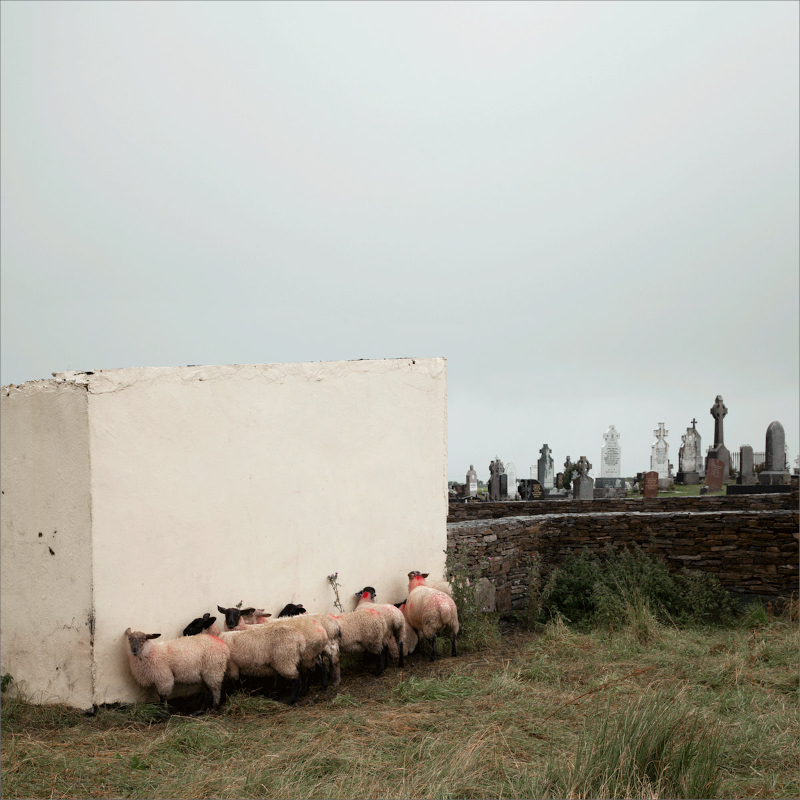
An exhalation that wedges itself between folds of electronics
There’s a quiet way of returning to things. It’s known only to those who don’t seek noise, but traces. Alessandro Sgarito does just that with Appartenenza (Belonging), a work that moves within that subtle threshold where personal identity merges with the emotional landscape that has shaped it. It’s a sonic diary etched on invisible film, where each track is a frame fading slowly, like the memory of an empty room.
In 2023, with Il Giorno Prima (The Day Before), Sgarito had already sketched a map of transformation: an album built on emotional transitions, where each piece was a moment suspended between who one was and who one was about to become. He described it as “the day before,” that ordinary day you only realize was the last of something once it’s gone. With Appartenenza, that sense of threshold deepens not change, but the awareness of existing within its margins.
Sgarito hasn’t forgotten the emotional tension he once shaped with Agate Rollins when electronics were a form of resistance, of exploration. But now, everything becomes subtler, more rarefied, more intimate. From the opening track, “Abbandono,” this shift is palpable: an expansive opening, built on resonances and pauses, as if the sound itself were searching for a place to rest. “Il cielo si fa cupo” reinforces this idea of fluctuating temporality: a slow build of sonic details that doesn’t create a narrative, but an atmospheric condition.
Like a breath in search of oxygen ::
In “Neon,” Roberto Mares’ flugelhorn breaks through like a mirage made of brass and flesh, not a melody, but an exhalation that wedges itself between folds of electronics. The piece feels urban, but an urbanity long abandoned, lit only by leftover glimmers. “Spettri” doesn’t lie: evanescent samples and fading rhythms vanish before they fully form, like presences that elude any attempt to be pinned down.
“Respiro”, also featuring Mares, seems recorded inside a dream: the sound opens up, then retreats, like a breath in search of oxygen. It plays like a suspended interlude, where doubt becomes structure, and structure wavers. “Titoli di coda,” with the liquid, minimalist piano of Ewa Dominika Lorek, is the moment where time breaks entirely, not an ending, but a slow dissolve, a vanishing one.
Then comes “Hollywood,” and you might expect irony or rupture. Instead, it’s a ghostly track, a reflection on an elsewhere that no longer exists. The album closes with “Carezza,” which truly delivers on its title: a light, imperceptible gesture, yet full of restrained humanity.
Appartenenza is an album that doesn’t try to explain itself, it invites you to live within it. It doesn’t demand your attention, but earns it with the quiet confidence of someone who knows that true beauty never announces itself.

Appartenenza is available on Shady Ridge. [Bandcamp]




![[2View] Nekomachi/no wonder • なるほど & tsubai/ilulissat (Perceptual Tapes)](https://igloomag.com/wp/wp-content/uploads/2026/10/nekomachi-no-wonder-tsubai-ilulissat-tapes_feat-75x75.jpg)