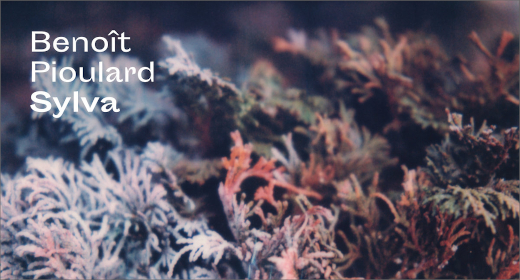





Stanza IV is the latest chapter in Benoît Pioulard’s ambient series—a richly textured collection of slow-moving, analog-driven compositions blending guitar, tape loops, field recordings, and synths. Deeply meditative and emotionally resonant, the album is paired with Stanza IV [Versions], a full-length rework collection featuring artists like Clarice Jensen, Arovane, and Markus Guentner, offering new dimensions to Pioulard’s immersive sound world.
Analog textures, tape loops, and meditative soundscapes
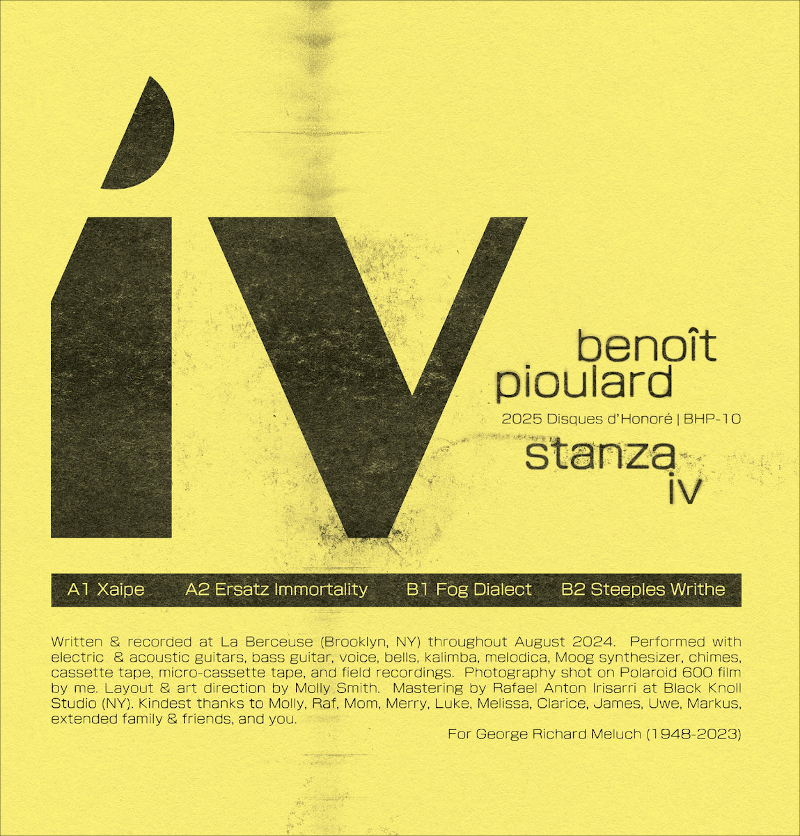
Since its inception as a set of simple, unadorned guitar works, the Stanza series has grown in scope and complexity, resulting in some of Benoît Pioulard’’s most deeply layered and striking instrumental pieces, here performed with electric & acoustic guitars, bass guitar, voice, bells, kalimba, melodica, Moog synthesizer, chimes, cassette tape, microcassette tape, and field recordings.
What I hear is somewhat dark, orchestral, and glitchy, the tonality is rich and soothing, at the same time that a unified tonality opens the portal, a slow motion sense of a very layered complex full orchestra. There are four titles plus each collaborator contributes one mix version for a total of 10 tracks, slow sleepy extended atmospheres and glitch-friendly layered drones of extended lengths, consistent tonality and consistent dynamics.
Benoît Pioulard’s Stanza series began in 2015 as a daily method of inward gazing during a particularly dreary Seattle winter. Each morning, with a Telecaster and tape recorder, he would build a gauzy, lo-fi loop in a new tuning, creating improvisations of uniform length as a kind of sonic journal. Stanza I comprised a week’s worth of these hazy experiments, and was initially issued as a limited CD-R to accompany the Sonnet LP (kranky, 2015); Stanza II was recorded that spring, showcasing a more verdant, deep forest fullness; and Stanza III followed as a short run 10” lathe cut, to complement The Benoit Pioulard Listening Matter (kranky, 2016).
In the years since, Pioulard has crafted several renowned collections featuring this uniquely blissed-out tape saturation and ambient grace—including Lignin Poise (Beacon Sound, 2017), Sylva (Morr Music, 2019), and Bloodless (Disques d’Honoré, 2021)—alongside monthly exclusives for his Bandcamp subscribers, and notable collaborations with Rafael Anton Irisarri (as Orcas), Viul, and The Humble Bee. Following the death of his father, the completion of his dream-folk opus Eidetic (Morr Music, 2023), and a collision of personal struggles, Pioulard refocused his musical efforts as a means of meditation, resulting in the long-form movements of Stanza IV.
As sonically diverse as its roster ::
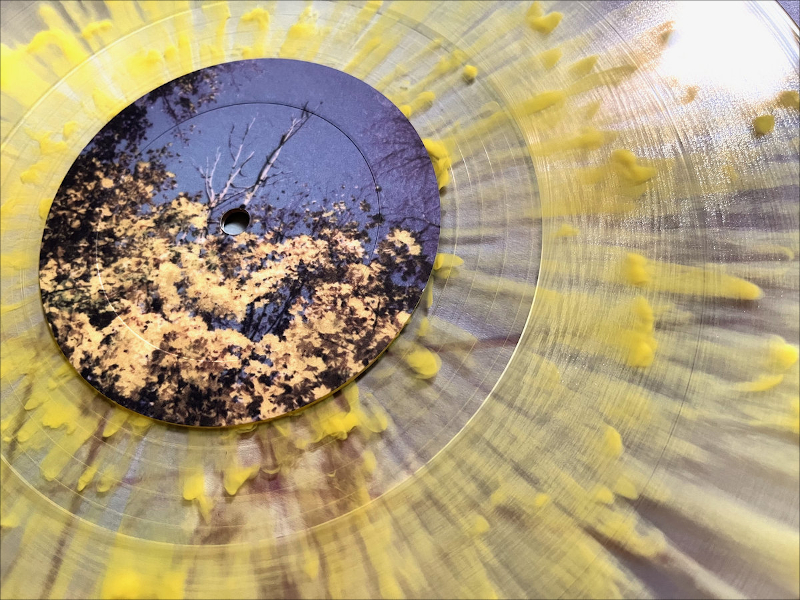
Stanza IV is accompanied by an album-length collection of reworks that is as sonically diverse as its roster, which features Markus Guentner, Arovane, Clarice Jensen, James Devane, MJ Guider, and Viul. Issued in a run of 100 cassettes with stamped, signed, and hand-painted packaging, it’s part of an extra limited edition of the LP that also includes an original Polaroid photo, tote bag, photo zine, exclusive tea blend, and glow-in-the-dark pin. The album is accompanied by a full-length rework collection, Stanza IV [Versions], featuring contributions from Clarice Jensen, Arovane, MJ Guider, Markus Guentner, James Devane, and Viul.
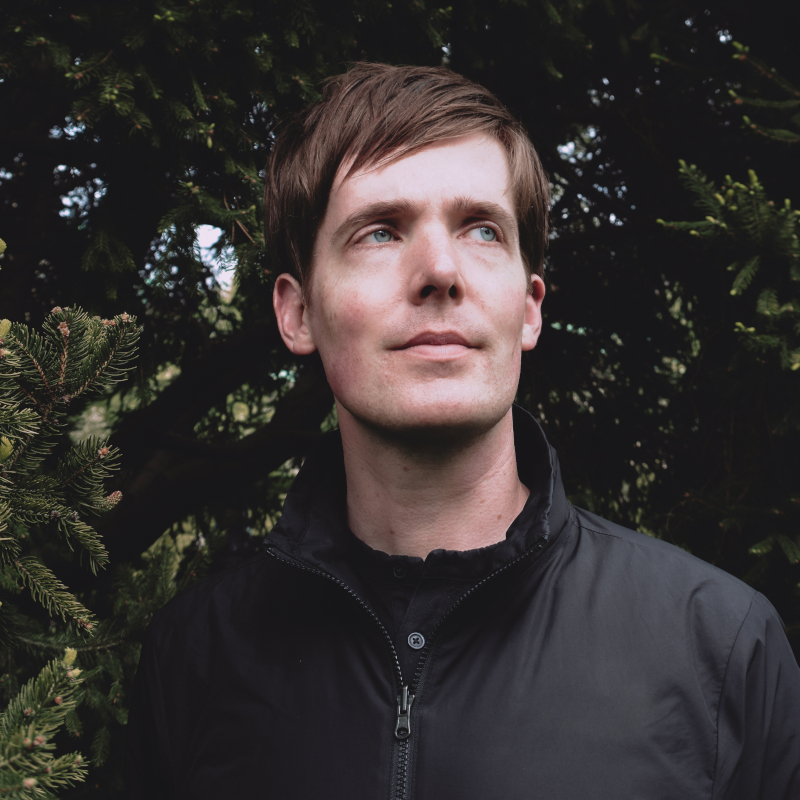
Thomas Meluch is an American artist who performs under the alias Benoît Pioulard and is based in Brooklyn, NY. Since the early 2000s, he has been crafting his distinctive style of textured, analog ambient music, with releases on labels such as Kranky, Morr Music, A Strangely Isolated Place (ASIP), and Past Inside the Present (PITP). He has collaborated with Rafael Anton Irisarri (as Orcas), Viul, and The Humble Bee. Meluch is also a writer and photographer.
Meluch began documenting field recordings and his own lo-fi compositions on dictaphones, discarded stereos and four-track machines in the mid 1990s, later focusing on highly limited CD-R and cassette releases of his experimental, folk-influenced songs for friends and family. In 2010, Meluch formed Orcas with minimalist composer Rafael Anton Irisarri. The duo’s self-titled debut was released in April 2012 on Germany’s Morr Music imprint, and its follow-up Yearling was released in early 2014.
It is time to open the portal. “Xaipe” (11:00) begins as a minimal vaporous non-form, just passing shapes in the fog, maybe an electronic ringing sound like fog over water down where the boats are tied up, a flowing slow moving full instrumental orchestra feeling, from the interior of a cloud, borderless and infinite dark forever on and on steady flowing with alternating tendencies woodwinds strings chimes a choir of mermaids shifting slowly always flowing swaying at the bottom of the sea in dim light, a flute. This is eternity, surrender to the void.

The light brightens ::
As a retired librarian you just know that I had to check this out, χαῖρε in Greek is an ancient word that has several meanings, all related to a sense of well-being and happiness. Rejoice! Be happy! Greetings! Hail! Now, when opening the gates, the light brightens and with ease things are moving very slowly, “Ersatz Immortality” (11:00) suggests that the consistency is complete, the flow goes on forever, embracing a unified full orchestra sound under the glitchy moon with more of that fog shapes business again. I live here now. Easing in next is “Fog Dialect” (11:00), the feeling rides along smoothly flowing into a magnificent extended fade out. Now imagine the sound of vertical snakes sort of pointing up to the sky, “Steeples Writhe” (10:59) feels like the sound goes through longer tubes with choral zephyrs, a long slow series of layers waving about as the slow snake trails rise into the sky, I think I hear an accordion too. I could be mistaken again.
Now we come to the interpretations, each guest performs their own remix of a track. The Markus Guentner version of “Xaipe” (6:57) completely changes the light, I hear a slow fade in with hidden textures and layers of glitchy fog, what is most different is the extremely slow fade in and occupying the higher end of the tonal scale, my sense of sunrise glow increases as we pass through the ringing whistling drone layers. Guentner blends various genres and has attracted fans such as Sven Väth and the Pet Shop Boys. He began his musical journey at the age of 13, when he started creating his first mixes on turntables and a mixing console. His track “Express Yourself” was used in the 2015 film Equals, which won the “Best Soundtrack” award. Since 2001, Guentner has also been working on film soundtracks, producing music for short films and projects like the ZDF show KAVKA. In 2005, he collaborated with Ivo Watts Russell (4AD) on a rework album for The Hope Blister and was involved in the art project Flashbox. In 2006, he co-founded the music collective SUBLIME e.V. in Regensburg.
Staggering beats and offsetting tension ::
The James Devane version of “Steeples Writhe” (5:15) adds some subtle staccato loop effects. Devane has been producing and performing music for over two decades, both in isolation and collaboratively (most notably as his duo En with Maxwell August Croy). Coming from digital manipulation of guitar based loops and heading into computer assisted vintage keyboards, modular based effects and my favorite, the classic original German minimal techno drum machine. I have never heard anything else like this. This track has a catchy beanbag percussion going on, later some guitar loops move in, I think I heard a fading harmonica. I love that. There are staggering beats and offsetting tension, is it going to resolve?
For the MJ Guider version of “Fog Dialect” (6:06) the echo-heavy dream pop of New Orleans-based musician/vocalist Melissa Guion glows perfectly. Her blissful, otherworldly compositions are inspired by her New Orleans surroundings as well as science fiction, making her full-length debut with the techno-informed ethereal pop of 2016’s Precious Systems, she moved in a more melancholy, darkwave-influenced direction after she has explored shoegaze, industrial, and gothic pop influences with 2020’s Sour Cherry Bell. What I hear takes me places, I am in a floating fog with drone glitch orchestras. Here different subtle stuff is happening, the sense of hearing people saying or singing bits, and in this mix it is obvious that something happened, it changed and now there is a new throb behind the buzzes. The ethereal vocals explode slowly.
Arovane is the recording name of German electronic music artist Uwe Zahn (born 1965 in Hameln, Germany). He also releases under the moniker Nedjev. He first began experimenting with rudimentary audio equipment and keyboards when he was 15. Over the years he continued experimenting and developing his sound, even learning to play the clarinet at one point. In the late 80s he began dealing with synthesizers and turntablism as well as deconstruction of hip hop beats. In 1989 Zahn began creating music with a collective of electronic musicians in Munich. This collective, known as S.A.M., was dedicated to creating live, free, electronic improvisational music and operated in Germany. Here, “Fog Dialect (Arovane version)” (3:28) keeps a safe and secure flow going, adding a strange sense of a motor running, I am on a train in motion.
Meditative yet with a sculptural sharpness ::
Clarice Jensen is a composer and cellist based in New York who graduated with a BM and MM from the Juilliard School. As a solo artist, Jensen has developed a distinctive compositional approach, improvising and layering her cello through shifting loops and a chain of electronic effects to open out and explore a series of rich, drone-based sound fields. Pulsing, visceral and full of color, her work is deeply immersive, marked by a wonderful sense of restraint and an almost hallucinatory clarity. Meditative yet with a sculptural sharpness and rigor that sets it apart from the swathe of New Age / DIY droners, she has forged a very elegant and precise vision. “Ersatz Immortality (Clarice Jensen version)” (5:01) brings out bowed strings and blessed electronica.
Bringing the momentum into the next dimension, “Ersatz Immortality (Viul version)” (9:52) gives me a crackly old recording sound, and sometimes a sense that something is rustling about down in the cave. I listen so that we all rise together at the end. Viul is pronounced ‘vell‘ and rhymes with ‘bell‘ is a well respected New York-based ambient composer. His many releases include Bright Decline, Outside the Dream World, Konec takeover Viul & Benoît Pioulard, Secret Recess, Dauw and Summer’s Wet Work Is Done. I must hear them now.
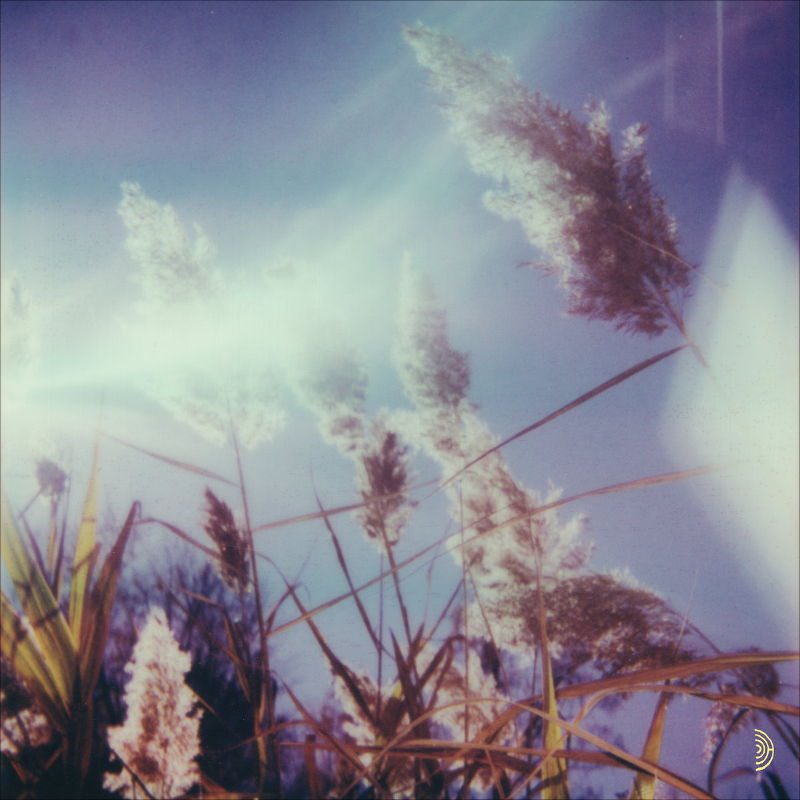
Stanza IV showcases Pioulard’s devotion to composing ambient soundscapes using analog gear. His connection to physical creative processes is further emphasized through his analog photography, which accompanies many of his releases—including Polaroid photos created for this one. Benoît Pioulard makes music to centre himself and reset. Each of the album’s four tracks evokes the warm optimism of Spring, with hypnotic melodies blooming from deeply layered, verdant textures.
Stanza IV is available on Disques d’Honoré. [Bandcamp]