





Natural recordings, soft rhythms, distortion, metallic noises, melody, and digital artifacts continually lean against one another without settling. By the end it feels less like eight compositions and more like half an hour spent inside a system that was continuously adjusting itself while you were listening, and never quite finished.
Everything feels connected by residue
Anushka Chkheidze and Robert Lippok make sense together. Chkheidze is a Georgian composer and producer based in the Netherlands. Lippok is Berlin, To Rococo Rot, Raster Noton, installation work, decades of treating electronic sound as material that gets layered, cut, reshaped, and left partially unresolved. They met in Tbilisi in 2019 through a workshop program, worked together on Glacier Music II, then built that into Uncontrollable Thoughts, their first joint album for Morr Music in 2025. Morr Music has spent decades in that specific space between electronica, ambient, post-rock, and minimal composition—múm, The Notwist, B. Fleischmann, music where texture and atmosphere carry as much weight as conventional structure. A natural home for this collaboration.
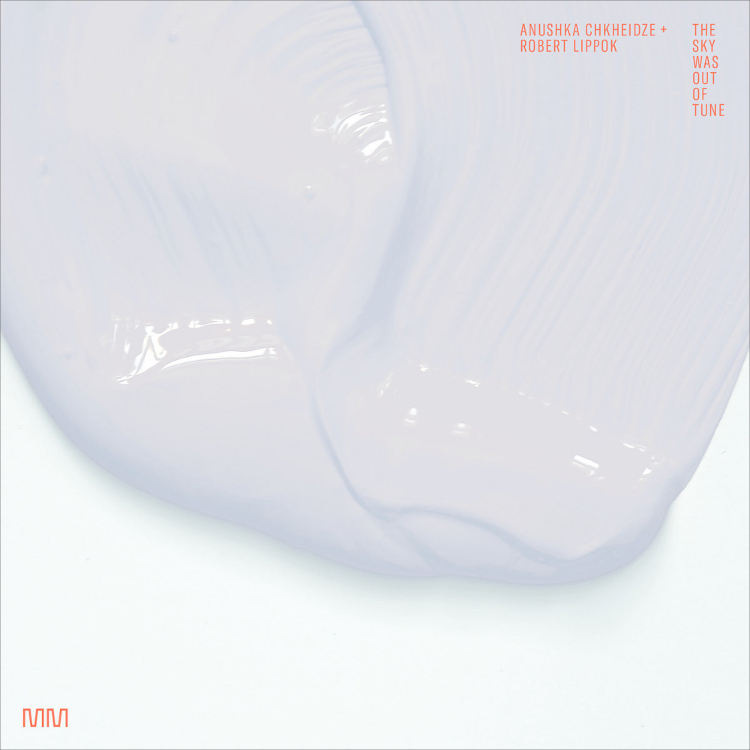
The Sky Was Out of Tune pushes further. Eight pieces, titled only with Roman numerals, and they really don’t function as separate tracks so much as sections of one continuous object. That makes sense, the music grew out of a live performance at Berlin’s Neue Nationalgalerie. Everything feels connected by residue. A texture disappears and something remains behind it. A rhythmic idea dissolves into ambience. A metallic sound becomes the thing guiding the next section without announcing itself as such.
“I” opens with what sounds like field recording, natural ambience, small bell-like tones, rattling, paper movement, objects handled close to a microphone. Hard to identify exactly what some of those sounds are. Records that begin this way can immediately position themselves as documentary field recording works where the environment becomes the subject. Here the material behaves differently. It’s preparation. Those sounds establish a physical space before synthetic material gets pushed into it.
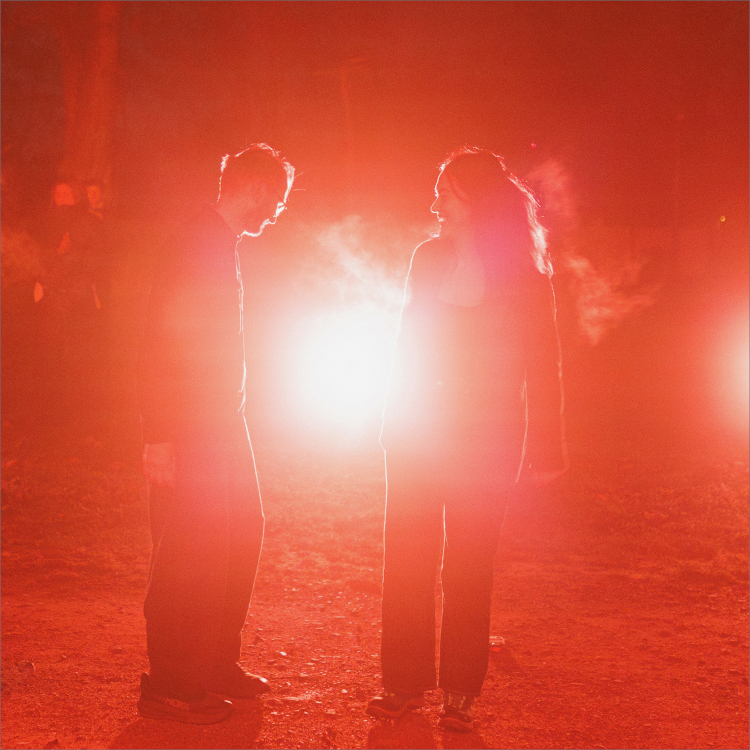
Tiny rhythmic impulses sit beneath the surface ::
That becomes one of the strongest ideas running through the record. Chkheidze and Lippok are extremely good at preparing the listener for something before revealing what it is. Ambience gathers density. Distortion arrives gradually. Tiny rhythmic impulses sit beneath the surface before becoming clearer. Metallic sounds enter and disappear like objects moving through the stereo field. No obvious drops. No resolutions. They build toward changes in texture instead, which is a harder thing to make feel earned.
Their process on Uncontrollable Thoughts involved long improvisations, selecting ideas afterward, sending projects between one another. Chkheidze contributing drums, piano, vocals. Lippok adding noise, harmony, sometimes reshaping the entire piece. He’s described his production as primarily layering, constructing, collaging, not sitting at a keyboard writing chord progressions. You can hear that philosophy all over this record.
Compared to Uncontrollable Thoughts, The Sky Was Out of Tune is more dissolved. The previous album still had recognizable individual pieces—”Bird Song,” “Rainbow Road,” soft beats, organ drones, clear rhythmic personalities moving between tracks. Boundaries here have almost completely disappeared. Uncontrollable Thoughts felt like two musicians improvising compositions. This feels like those same two musicians improvising an environment. The rhythm is still present but behaves more like weather than percussion.
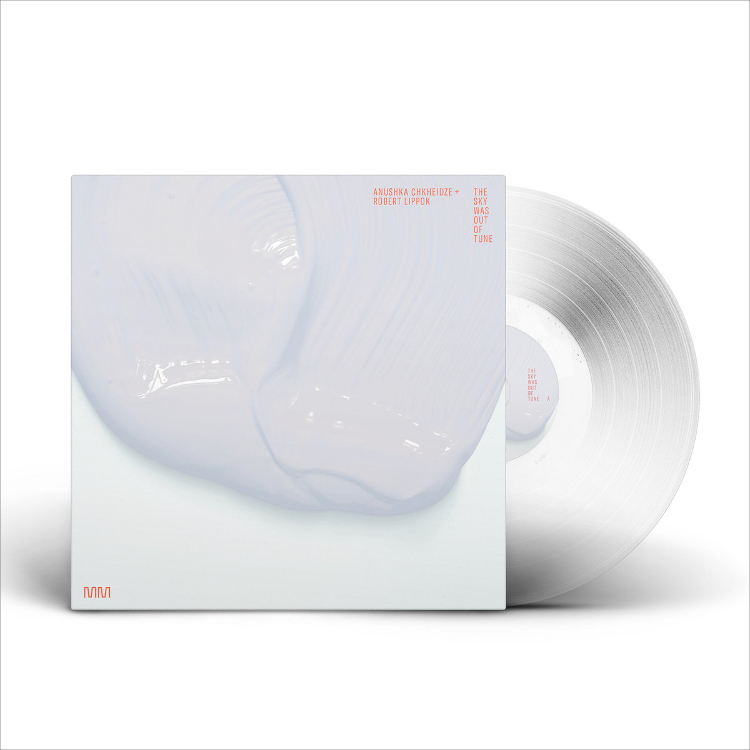
Digital texture and ambience overlapping ::
Soft electro rhythms surface throughout, especially when the album settles into its more defined sections. Nothing becomes overly forceful. Even when distortion enters it feels incorporated into the ambience rather than placed over it. There are moments that recall the softer edges of early Mille Plateaux material, digital texture and ambience overlapping until it becomes difficult to decide which one you’re actually listening to. The late 90s and early 2000s electronica sensibility is present throughout, that specific understanding that small rhythmic gestures can carry enormous emotional weight if given room.
“VII” is the most interesting section on the record and it lasts 35 seconds. The glitches become more exposed, textures start colliding, and suddenly the album sounds like it might move somewhere completely different—like a corrupted transitional file that accidentally became part of the release. Its short duration is what gives it impact. “VII” functions as a doorway into “VIII” rather than a standalone piece. An introduction to the outro. And that tiny moment reveals something about the whole record, Chkheidze and Lippok are comfortable letting an idea exist only as long as it needs to. A texture doesn’t have to develop into a full track. A rhythmic pattern can appear for seconds and disappear. Something can sound important and still never return.
The title describes the music unusually well. A sky being out of tune doesn’t mean the environment has collapsed, it means something familiar has shifted slightly enough that you start paying closer attention. That’s what happens here. Natural recordings, soft rhythms, distortion, metallic noises, melody, and digital artifacts continually lean against one another without settling. By the end it feels less like eight compositions and more like half an hour spent inside a system that was continuously adjusting itself while you were listening, and never quite finished.
The Sky Was Out of Tune is available on Morr Music. [Bandcamp]