


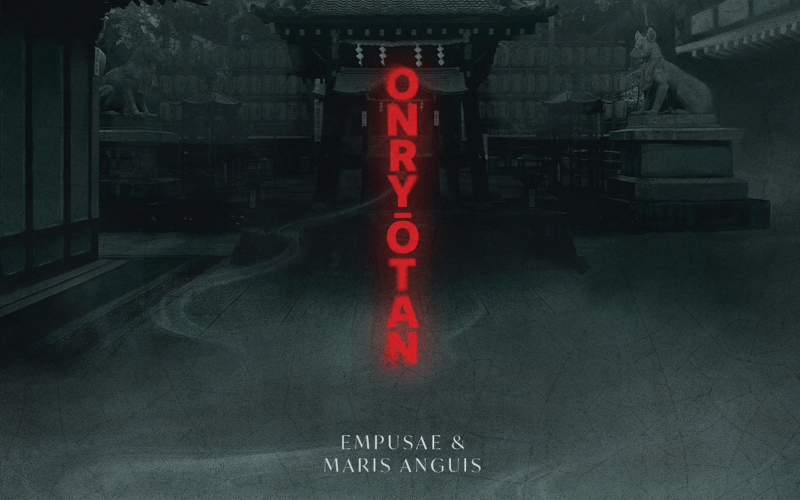



Empusae and Maris Anguis have crafted a fantastic album that rewards repeated listening and offers a welcome step toward a more spiritual and cultural focus for their label Cryo Chamber.
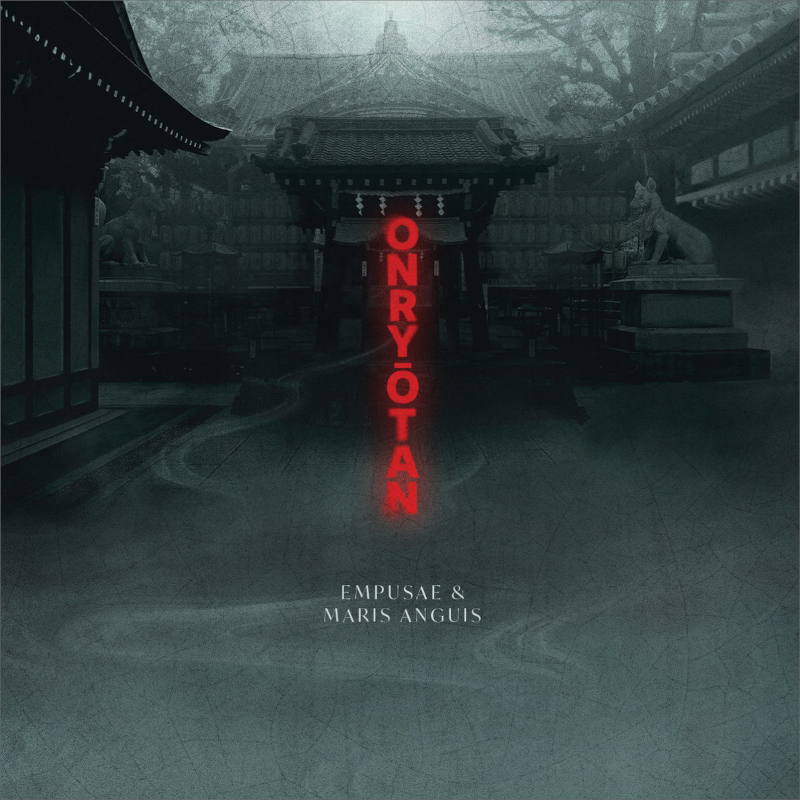
A cinematic, immersive dark ambient soundscape approach
Addictively creepy and unsettling, Onryōtan provides a lovely and terrifying musical introduction to the rich supernatural lore of Japan, from monstrous yokai to vengeful onryo spirits to black curses by scorned women and much more. Belgian musician Empusae (Nicolas Van Meirhaeghe) brings a cinematic, immersive dark ambient soundscape approach, while Tokyo-born and Illinois-based Maris Anguis (Ryo Utasato) contributes a more organic approach with traditional Japanese instruments alongside synths and a haunting, mournful, enchanting voice.
The album consists of seven tracks—two solo compositions from each artist, and three collaborative ones. Each track ranges from five and a half to seven and a half minutes, which is long enough to be immersive, but short enough to provide a nice diversity of approaches.
The opening collaborative track, “Eien no Yami” (“Eternal Darkness”), sets the stage by building a haunted soundworld that threatens to swallow the listener whole. For me Ryo Utasato’s voice steals the show—I think sung vocals are underused in dark ambient, especially female ones, and here one can easily imagine them coming from the mouth of a vengeful female spirit. Listening feels like floating in a thick fog that clings clammily to your clothes as the gates to the land of the dead creak open with an otherworldly scream.
“Kurozuka” follows with a reimagining of the famous Japanese man-eating ogress Kuromitsu, who haunted the black mounds for which the track is named, devouring unwary travelers who accepted the invitation to sleep in her cave. This is one of Maris Anguis’ solo compositions, and I appreciated the mix of electronic ambience, percussion, and traditional Japanese stringed instruments, which together build a hushed, haunted feel punctuated with moments of pure screaming terror. The very stones seem to whisper both an invitation and a warning.
Next up is “Tename” (Tenome), named after a yokai monster that has eyes in the palms of their hands rather than on their face. This is one of Empusae’s solo tracks, and falls more on the black ambient side. The listener gets a sense of a vast darkness surrounding them everywhere they turn, through which curling mist-tendrils drift, clutching at you with clammy fingers. The track ends in silence, as if evoking the moment after the monster has sucked out the victim’s bones.
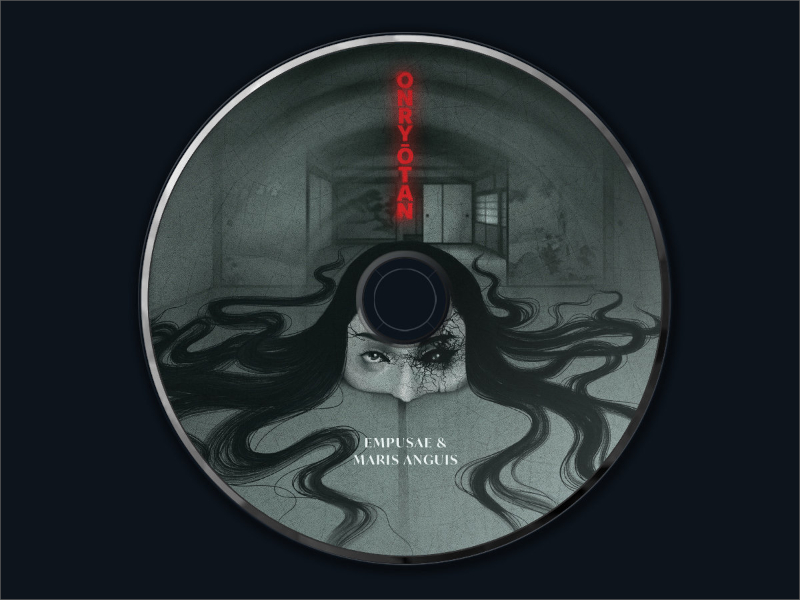
A driving, twisted ritual atmosphere ::
“Ushi no Koku [Mairi]” is another collaborative track, and one of my favorites on the album. The name refers to a “shrine visit at the hour of the ox,” the blackest part of night between 1 and 3am, when the boundaries between the worlds of the living and the dead are at their thinnest. This is when a scorned woman can visit a shrine unseen for seven nights, pounding nails into the temple’s wood that cause wracking pain to their victims, and/or summon an evil spirit to devour them. Ryo Utasato composed an entire album with Fabio Keiner on this subject a few years ago, so it’s not a surprise that this track is a standout. Drums build in the background throughout the track, overlain with immersive dark synths, which together create a driving, twisted ritual atmosphere. Ryo Utasato’s vocals powerfully evoke the feelings of the wronged woman performing the ritual, while a chorus of the damned joins in horrific sympathy.
Maris Anguis’ solo track “Mukaebi” comes as something of a relief, evoking the fires that the faithful light during the festival of Obon to guide the spirits of the beloved dead back to their homes for a new year visit. The track opens with a gong as the gate to the land of the dead creaks open. Eerie flutes trace the journey of the dead souls to home and back. The chanted chorus intoning as wood blocks are struck gives the track a deeply spiritual feel.
The last shared track, “Chimatsuri,” tells the story of a blood rite in which an enemy soldier is sacrificed as a blood offering to ensure success in a battle. Synths slowly build an oppressive feel as inky black fingers of night reach out to touch and then ensnare the victim. Deep drums drive the horrific ritual forward, thudding like blows falling upon an already shattered body spouting blood as a hellish offering. Flutes add a sense of nervous tension and a longing for release from this dark spell.
Empusae closes out the album with “Teke Teke,” whose name refers to the click-clack sound that the vengeful spirit of a young woman is said to make as it scuttles faster than a speeding car after its victims with its hands and elbows alone, since its legs were sheared off by a passing train. The synths craft a thick, suffocating miasma that surrounds the listener. Tension slowly builds throughout the track: is that a skittering sound in the distance? Low drums sound ominously, flutes twitter like unseen spirits, and a mournful female voice moans her sorrow and rage.
My only quibble is that I wish the digital version of the album listed the instruments played on each track—I got the sense that traditional Japanese instruments were being used, but I would love to know which ones. Translations of the lyrics that Ryo Utasato sings in Japanese on two tracks would also be cool. In any case Empusae and Maris Anguis have crafted a fantastic album that rewards repeated listening and offers a welcome step toward a more spiritual and cultural focus for their label Cryo Chamber.
Onryōtan is available on Cryo Chamber. [Bandcamp]