


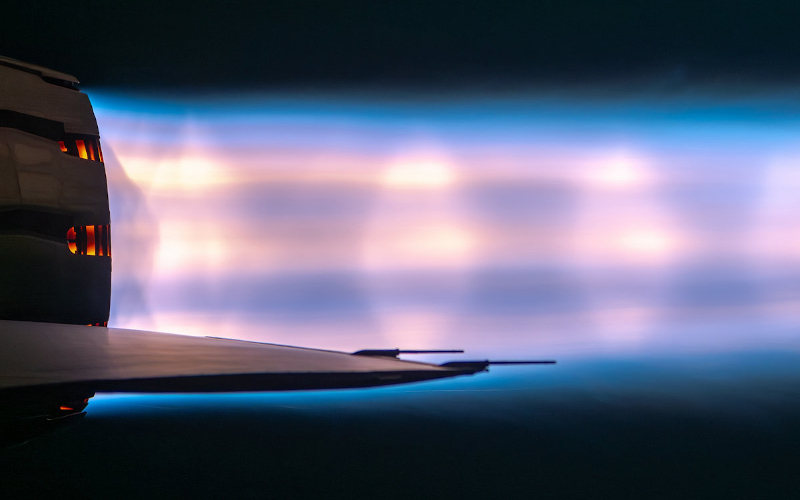
Unlike the usual live record, Under Certain Light and Atmospheric Conditions refuses to offer the listener a concert experience by proxy, to be had in the comfort of one’s own headphones. The inclusion of these field recordings, and the fact that over half of the tracks are soundcheck improvisations and unreleased compositions, distances the album from a simple celebration of his past catalog.
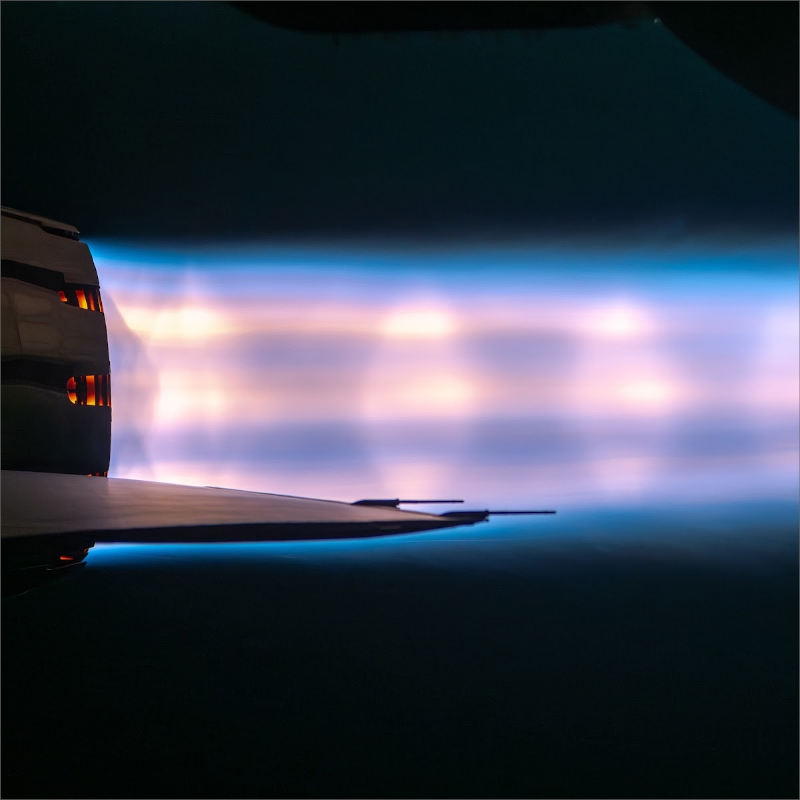
A radical shift towards a different concept and aesthetic
Every new Ben Frost album is a revolution in his discography, a radical shift towards a different concept and aesthetic: from the artificial hospital-ward light of Theory of Machines to the wilderness and acoustic dramaturgy of By the Throat, from the distorted, annihilating cosmic force of A U R O R A to the turn to conceptualism of The Centre Cannot Hold, all the way to the minimal, hyper-compressed threat of last year’s Scope Neglect. The latter—largely built around Car Bomb’s guitarist Greg Kubacki and My Disco’s bassist Liam Andrews—melded the disparate worlds of industrial and electronic music, minimalism (both as a compositional technique and as an ethos), and the calculated fury of genres such as djent and post metal: in Scope Neglect, the silence is not atmospheric—it is a real vacuum—and aggression doesn’t build up, it is instant and exact: one listen to its unforgettable, quasi-Meshuggah opener “Lamb Shift” (and maybe a look at its waveform) will sufficiently explain this.
In between these major studio albums, Frost maintained a diverse and rich sound practice including soundtracks for film, ballet and opera, art installations erecting a 20-meter spiral of speakers or pushing the audience in the middle of a gale of sound and flashes, collaborations with artist and documentarian Richard Mosse (more on this later), and field recordings of subjects as disparate as Icelandic volcanic activity and the progressive destruction of the Amazon rainforest.
Rooted in live performances ::
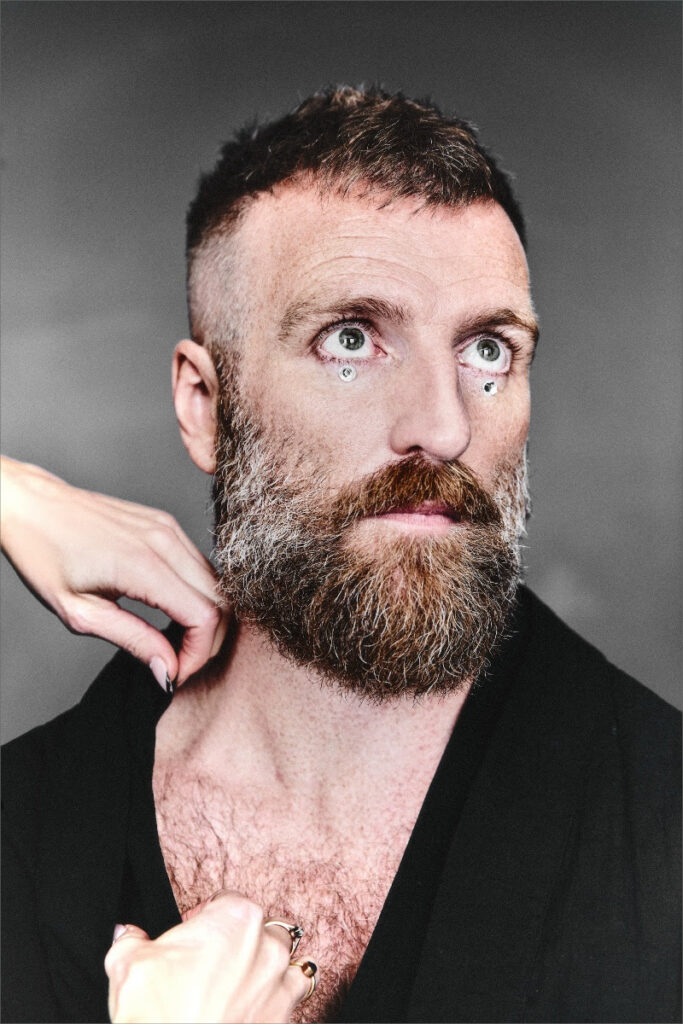
While at a first glance it might look like a simple live recording of Scope Neglect—and it does share three tracks with it, as well as Kubacki’s guitar and some themes in the track titles—”Under Certain Light and Atmospheric Conditions” takes elements from a few more of these previous lines of work, and is an interesting capsize of the conceptual framework and definition itself of Scope Neglect. Each track is rooted in live performances from different countries around the world, and altered with field recordings that add their own meaning in interaction or contrast with the location: when a storm and air raid sirens follow the Kyiv performance of “Permcat,” a beautiful expansion upon the hazy melodic components of “Tritium Bath,” the emotional and political component of the music is suddenly revealed, or enhanced. Then “Trancelines” kicks in abruptly with pointillistic synths and heavy guitar riffing chasing after each other, colliding through Frost’s trademark extreme sidechain compression—it is an incredible testament to how emotive and powerful heaviness can be in music.
Unlike the usual live record, the release refuses to offer the listener a concert experience by proxy, to be had in the comfort of one’s own headphones. The inclusion of these field recordings, and the fact that over half of the tracks are soundcheck improvisations and unreleased compositions, distances the album from a simple celebration of his past catalog. The transitions between tracks are jarring and rooted in anguish (the two seconds of laughing between “Trancelines” and “Chimera” feels exactly like jolting awake in a pang of anxiety after unwillingly falling asleep on a plane)—they further isolate them into distinct fragments/documents of the specific situation where they took place, pieces of music that could only happen when they did happen, under those certain conditions.
Tonal extremes ::
In his photography and video work, frequent Ben Frost collaborator Richard Mosse has documented some of the world’s most ravaged areas in dazzling color: in The Enclave, the eastern Democratic Republic of Congo at war is shot in neon pinks and purples through color infrared film originally developed for military reconnaissance, and in Broken Spectre, the Amazon rainforest is hypersaturated with cyans, oranges and reds. This series includes photographs of the Brazilian Pantanal, the world’s largest tropical wetland, a quarter of which was destroyed in 2020 by wildfires exacerbated by climate-change. The extravagant colors are not an artistic license, they serve to convey the extreme scale of the anthropogenic damage caused to these regions.
Much of Ben Frost’s music does something similar with its tonal extremes, and after the assault of “Turning the Prism,” Under Certain Light and Atmospheric Conditions ends with “Prism Inversion,” a simple and beautiful broken chord from a live in Cuba playing over field recordings from the Pantanal: a backdrop of alarmed bird calls and the crackling of fire (but if you do have scope neglect, you might mistake this for the sound of rain drumming on lush tropical flora), growing louder as the synth melody repeats and ultimately dies out. It’s a peaceful if depressing ending to the album, a wakeup call not through panic but through calm clarity.
Under Certain Light and Atmospheric Conditions is available on Mute. [Release page | Bandcamp]


![[2View] Nekomachi/no wonder • なるほど & tsubai/ilulissat (Perceptual Tapes)](https://igloomag.com/wp/wp-content/uploads/2026/10/nekomachi-no-wonder-tsubai-ilulissat-tapes_feat-75x75.jpg)