


Every bit as eclectic, nuanced and playful as all of his previous work, Dubio is still Kettel, but reforged in a glittering new image. One that takes time to slither into the subconscious, but grows more compelling with each listen. One that compels a reevaluation of his entire oeuvre.

A new chapter for Kettel
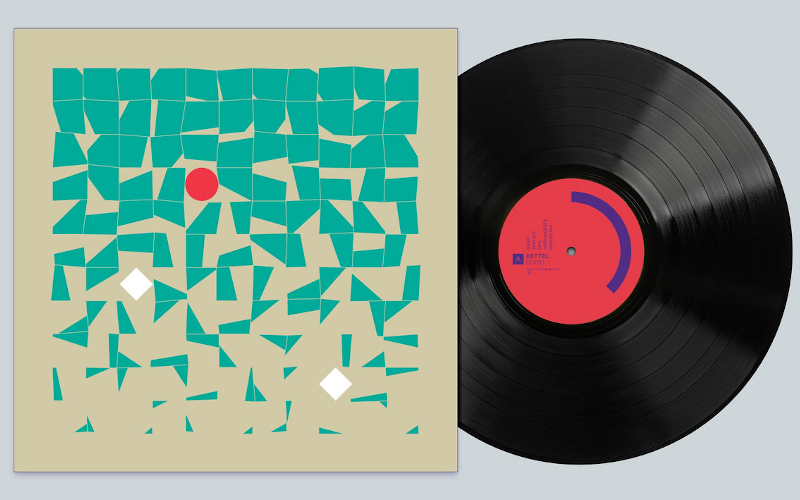
What’s this? A new album from Kettel, after… what… eight years? Well, that is if you don’t count Dwingeloo Life Extension, a digital-only and self-released via Bandcamp affair that had more of a feel of compilation than anything else. There’s a reason why Reimer Eising‘s Kettel output often gets compared to other artists like Plaid, and it’s for good reason. They seem to share a passion for constantly reinventing themselves with little regard for current trends or styles, and a passion for mirror-polished sound design. Exciting then that Dubio feels like a new chapter for Kettel.
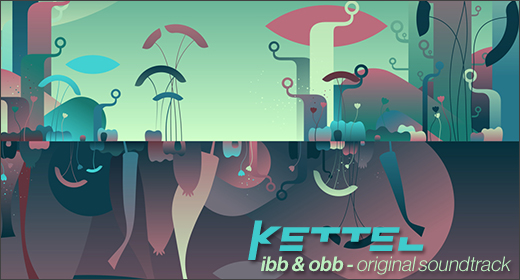
It’s not the first time Eising has released an album that is effectively the soundtrack to a video game; that privilege went to Ibb & Obb, originally released on the defunct Sending Orbs label back in 2013. Dubio, the game, is an indie release that describes itself as “a game of tiny puzzle parcours.” Dubio the album, however, is not technically a soundtrack, but a collection of tracks based upon the more barebones themes created for the game that have been developed into more intricate and complex, full-blown album tracks.
As such it shouldn’t really come as a surprise that the musical content sounds substantially different to Kettel’s more traditional output, no matter how much that has evolved over time. But there are moments on Dubio that are almost completely unidentifiable.
Eising leant into classical instrumentation quite heavily on Whisper Me Wishes (Clone, 2007) and Myam James II (Sending Orbs, 2009), with smatterings also appearing on Wingtip (Clone, 2016) and to an extent on When Can (Sending Orbs, 2013, and Lapsus Perennial Series, 2024) his collaboration with Secede. That’s all gone now, replaced by an entirely new, meticulously curated sonic palette painted on a completely fresh canvas.
An entirely new, meticulously curated sonic palette painted on a completely fresh canvas ::
Almost the entire album is drenched in the most beautifully balanced reverb, giving it more spacious, almost transcendental quality. It lends warmth and welcome to more playful tracks like the bubbling “Apeface” or the metal pin pricks and military percussion of “Leotarda,” both of which are one hundred percent familiar Kettel country.
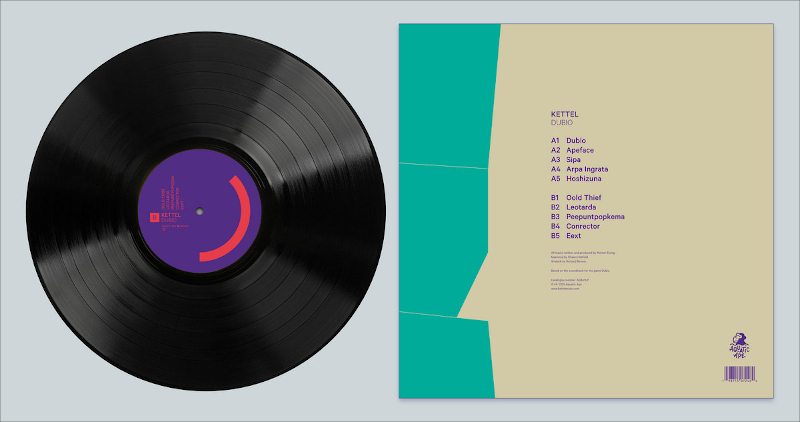
But to tracks like the opening “Dubio,” which seems almost designed to shock the avid fan, it adds a cavernous, sinister quality to the extremely loud bangs that resonate like distant explosions from the moment it opens. These reverberating bangs return in the floating, sustain-fuelled “Gyzelaar”—one of two tracks to be omitted from the vinyl edition of Dubio, presumably due to timing —while the thudding beat and bright synthetic vibraphone of “Oold Thief” is so drenched in reverb its as if it’s being performed in a deep, chilly underground cave containing a reflective pool.
The crank and fizz of “Sipa,” the spectral, fluted pipes and crystalline keys of “Hoshizuna” or the caliper clicks and woozy notes of “Conrector,” while to some extent harken back to the more introspective intermissions on “When Can,” are something altogether new in Kettel’s eclectic kanon.
Don’t be in any doubt. Dubio is as meticulously produced and designed as any of his more recent work, and some may lament the more off-kilter, sometimes discordant sound Eising once employed, but those flaws reappear here in subtly different ways. Every bit as eclectic, nuanced and playful as all of his previous work, Dubio is still Kettel, but reforged in a glittering new image. One that takes time to slither into the subconscious, but grows more compelling with each listen. One that compels a reevaluation of his entire oeuvre. And how wonderful is that?
Dubio is available on Aquatic Ape. [Bandcamp]