



Throughout El So de los Muertos, this sense of awe at the geological scale of something larger and more ancient is present both in sound and aesthetics, as shown by the album name itself (“The Sun of the Dead”) as well as track titles with translations like “The Earth and its subterranean powers.”
Textural expression
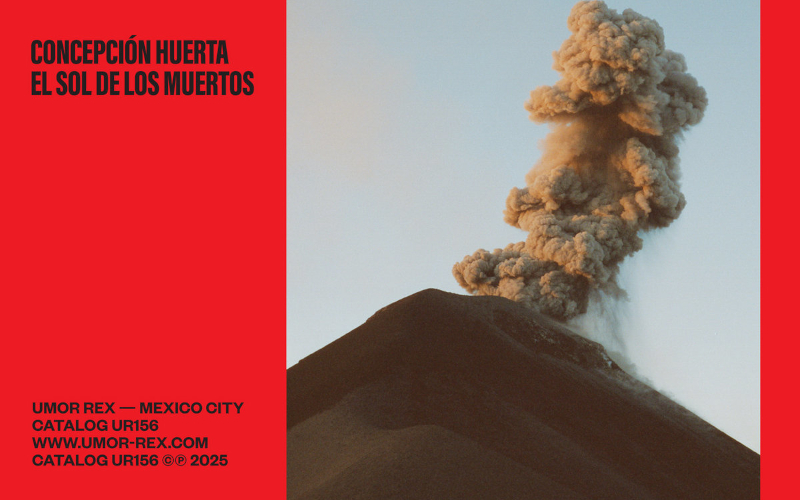
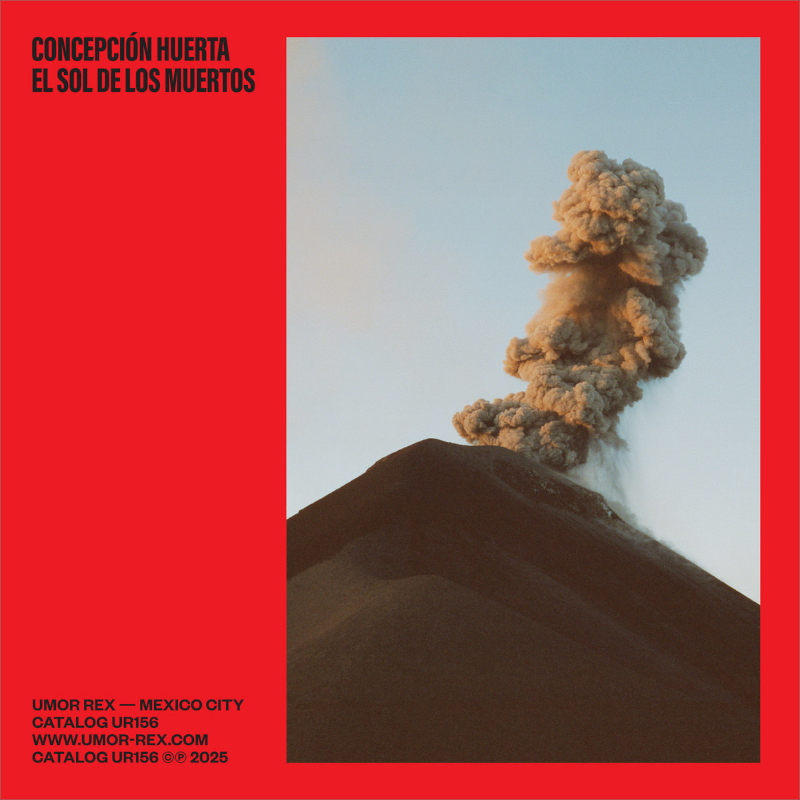
El Sol de los Muertos, Concepción Huerta’s new album on Mexico City’s Umor Rex, opens with a far-away wail, drenched in huge reverb to an extent that’s only fitting to geological times and spaces. The cover art—a photo of Guatemala’s Volcán de Fuego in the act of ejecting a vertical cloud of ash—suddenly clicks, matching the music perfectly. Throughout El So de los Muertos, this sense of awe at the geological scale of something larger and more ancient is present both in sound and aesthetics, as shown by the album name itself (“The Sun of the Dead”) as well as track titles with translations like “The Earth and its subterranean powers.” Some of these geological themes had already been explored in Huerta’s The Earth Has Memory (Elevator Bath, 2024), itself “a descent to the center of the Earth,” which however presented a less monolithic, slightly more melodic palette.
In El Sol de los Muertos, volcanos, as the portal through which the Earth shows its fiery inside and lets it run like open veins, are elected as a symbol of resource exploitation and dispossession in the context of post-colonial Latin America. To achieve this, the album explores a vast range of drones “crafted entirely within a subharmonic framework,” concrète methods and recordings where the sounds’ referents are muffled, and tape manipulations, resulting in a very complex and textural sound that makes it hard to grasp the record if not through an act of surrender to its sheer weight.
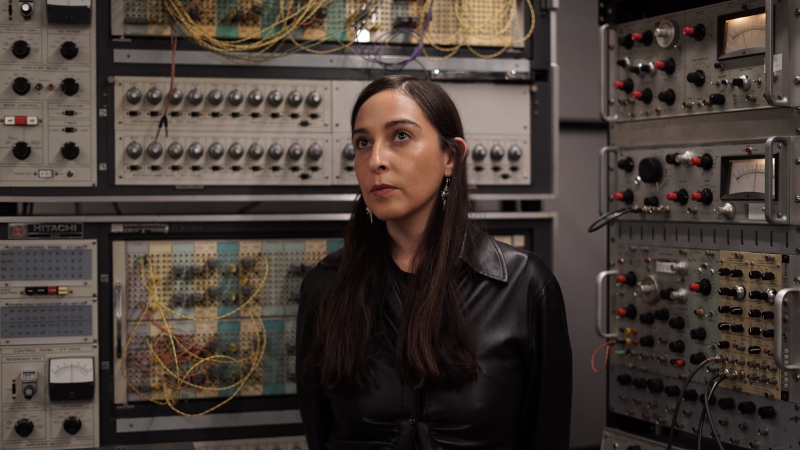
Overwhelmed by a menacing drone ::
The title track, for example, starts with a huge, almost brassy chord that repeats over and over, getting dirtier with each repetition, until it switches to a deep melodic progression which, again, is soon overwhelmed by a menacing drone. The result is an intense, sometimes abrasive sense of force and power, which comes across almost as a documentation of the cry of the Earth. When this ends—abruptly—“Los Ecos de las Voces del Silencio,” one of the most drone-like tracks in the album, starts in medias res with a much higher tone, as a different fragment documenting the enormous howl of the Earth by means of examples. This type of sonic intensity and nuance recalls some of Rafael Anton Irisarri’s more abstract work—after all, the excellent mastering on El Sol de los Muertos is his.
The album closes on a sound that feels oddly sharp and localized in the context of the previous 40 minutes. It could be a tape machine malfunctioning, or an igneous rock rolling down the side of a mountain. This final material, textural expression is a surprising call back to the thematic background of the album as well as to its method, marking an end to the reflection, and a come back to the contingent world.
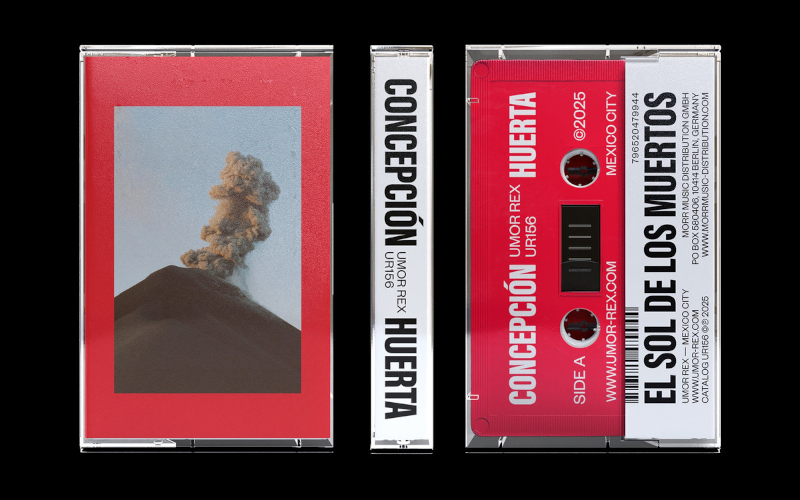
El Sol de los Muertos is available on Umor Rex. [Bandcamp]



![[2View] Maps and Diagrams’ beneath still stars (handstitched*) & returning light (Home Normal)](https://igloomag.com/wp/wp-content/uploads/2026/10/maps-and-diagrams-returning-light-beneath-still-stars_feat-75x75.jpg)