


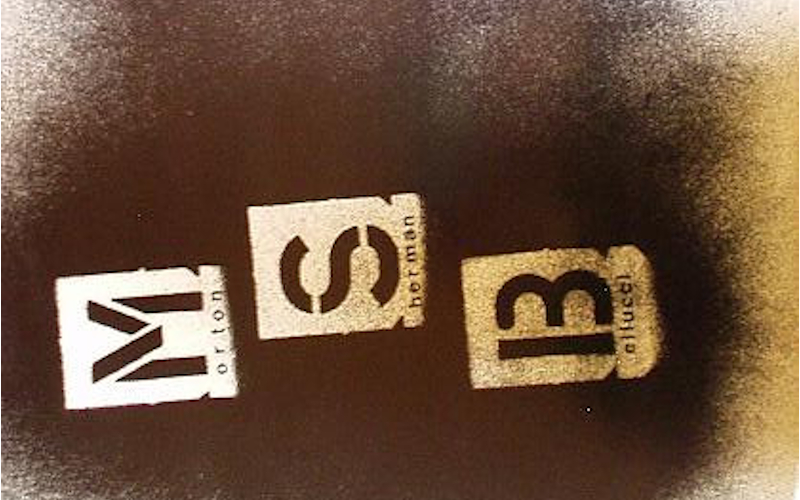



In the late 1980s, a small team of Belgian artists—armed with samplers, analog gear, and an irreverent sense of humor—flooded the underground with a staggering number of releases. At the center of this creative explosion were Jo Casters, Roland Beelen, and a self-described “tech-nerd in a basement,”—Sherman (Herman Gillis)—whose drive to experiment and produce helped define a formative era of electronic music. From pioneering New Beat to crafting club hits under dozens of aliases, their story is one of speed, spontaneity, and raw innovation.
The sound that accidentally changed everything
“Morton (Jo Casters), Sherman (Herman Gillis) and Belluci (Roland Beelen) were among the founders of the New Beat musical trend that started in Belgium and expanded to elsewhere in Western Europe in and around 1987. Combined, they released over 100 recordings under various names in less than a year during the peak of the movement.” ~Wikipedia
Releasing 100 Records in a Year: The Madness of 1988 ::
In 1988, you, Jo, and Roland released about 100 records in less than a year. How do you remember that year? How did you achieve such high productivity? Why did you want to release so much in such a short time?
Herman Gillis :: Antler Records, in particular, wanted that, and we did too—everything was going well, and we sensed it couldn’t last. I also couldn’t explain at home that I wanted to make a living from music; I felt like I had to move quickly.
At the end of 1988, Sherman was founded as a company, and I’ve remained self-employed ever since. Back then, I was a workaholic. I loved creating. The sampler was still new, and it fascinated me from the start.
It was also a legal gray area regarding copyright—sampling wasn’t clearly regulated yet. We were witnessing the start of a fundamental shift in the music industry. The CD was new as well, and unfortunately, people were beginning to move away from analog tape for mixing and mastering. Digitization—through sequencing and sampling—allowed us to work faster, but some of the sound quality was lost.
CD burners had just started appearing too, marking the early steps toward the collapse of the traditional music reproduction business.
Humor was a constant thread in our collaboration. Apart from Poesie Noire, we didn’t take ourselves too seriously—not even the absurd number of releases. It didn’t take long to make those tracks. With projects like Won Ton Ton, Nacht und Nebel, and Jos Borremans’ creations, Antler Records was starting to gain traction.
Creative Regret and Lessons Learned ::
Do you like everything you released that year?
No—sometimes I just did… whatever. I don’t even dare listen to some of it anymore. Some decisions were simply wrong. For example, Blow up the DJ – TNT Clan, (Deifying DJs was already a thing back then!) asking Kiss permission was a good idea, but using that vocal line altogether wasn’t!
SuperNova “BCLD”? Same story. I made the entire Neue Beat Collectione album in three days, plus one day of mixing. By 1989, the New Beat craze was already being exploited. Still, despite the poor quality, I think that particular release had a quirky, distinctive charm.
Over the years, I can still enjoy many of the tracks, but they’re definitely not high-end productions or audiophile recordings. What I learned from Antler is that high fidelity isn’t always necessary—fun and impact matter more. It’s always about the vibe.
Projects like Neue Welle, Trio-Dadada, and the later lo-fi movement confirm this. “Good” and “bad” are very relative terms, especially in those days.
Inside the Studio: Roles and Relationships ::
What was the working relationship between you, Roland, and Jo? How did you achieve such high productivity?
Despite earlier bands and placing second in Humo’s Rock Rally with The Passion of a Primitif (TPOP) in ’86, I was still insecure, timid, and unworldly when it came to the music industry.
Jo was the complete opposite. We complemented each other well. His childlike enthusiasm for everything I did was refreshing and contagious—I never needed cocaine. I would sample drum loops and sounds, and Jo would bring me stacks of CDs to draw from.
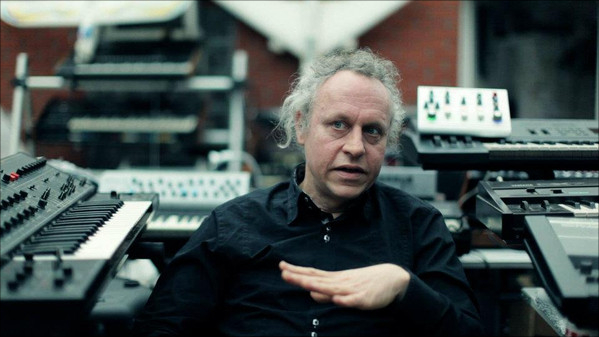
I was the nerdy tech freak working out of my parents’ basement. I knew the gear and sequencing inside out. I even built a delay system for MIDI signals to improve timing. I’d already learned musical arrangement as a kid, playing the Eminent organ at home. No musical education whatsoever, just following my feelings.
Jo would compose the basic ideas for PN at his place, and I worked out the arrangements, created the dance tracks, heavy and world music from home, usually after a phone call from Jo with a gimmick or idea. I’d make demos and drive to his apartment in Leuven for approval. Often, to my surprise, Jo liked them.
Then we’d go to ACE Studio in Aartselaar. I’d load up my car with gear, pick up Jo, and transfer the tracks to tape using SMPTE sync. We mixed while running sections in MIDI. It was an efficient system.
Roland usually heard the tracks for the first time at the studio, he trusted Jo‘s vision, and could mix with fresh ears. Sometimes, an invited vocalist would contribute to two projects in one session—like “Chinese Ways” (used in a movie) and “TNT Clan.” So we often mixed two maxi’s and their B-sides in one day, such as Fruit of Life – “Are You Conservative” and Erotic Dissidents (ED)– “Move Your Ass.” The album of ED was finished in a few weeks.
Jo’s main roles were coaching, motivating, and providing musical references. He was also the visionary and catalyst. My work rarely needed changes. Jo also had connections in fashion and art schools. For example, the Mad Max-style outfits for Erotic Dissidents were designed by artists like Idriz Jossa and fashion designer Bart Declerck. Eventually, the process ran so smoothly that I began coming up with the gimmicks myself. “Taste of Sugar” I did in three days after a call stating that title, the follow up album in a week or 2.
But Jo got bored in the studio. Our egos clashed, and friction—financial and otherwise—arose between the three of us. After a disastrous tour in France, I didn’t want to do gigs with PN anymore, nor did I wanted to continue playback gigs for Erotic Dissidents. I preferred making the records: doing that is what I loved the most.
Gear Talk: The Technology Behind the Music ::
What equipment did you use to create and record music?
Jo wanted top-tier equipment for the new PN record Tetra within his budget: a Sequential Prophet 3000 sampler and a Yamaha RX5 drum machine. He already had an Atari 1040 and a Yamaha DX7.
That marked the beginning of my collaboration with him, while I was still doing military service. I had already spent my savings on a TX7, Juno 106, Ensoniq Mirage, and a Sequential Pro-One.
Before, in the TPOP era, I used an Apple II as a sequencer, which I hacked to control homemade effect gear. Later, I used Logic and Cubase on the Atari 1040 and later the Mega 2.
For vocal recordings, I used a Yamaha 4-track cassette recorder. I turned off DBX while sampling—it sounded better. I’d record vocals at home as long samples to save studio time.
In the studio, Roland would occasionally use an Aphex Aural Exciter for extra low end, and use reverb effects. The required delay times, I got from a beforehand calculated table.
Eventually, I added Akai samplers and a Roland R-8 drum machine to my setup. I’d also run loops or samples through effects units like the Roland GP-8.
Identity and Pseudonyms ::
Why did you use so many different names?
That’s really a question for Jo. In the ’80s, everything revolved around image. Releasing under different pseudonyms was part of that. The wide variety of styles we worked in naturally became distinct projects, often released under the MSB umbrella.
Highlights from the Era ::
What do you consider your best releases from that period—and why?
Some Poesie Noire tracks like “Pity for the Self,” and the albums Tetra and Love Is Colder than Death, are seriously underrated. It’s a shame Marianne didn’t feature more—her voice, paired with Jo’s, was special. By the way, I’m sure Moby has records of PN.
Doing In Sotto Voce was also fun. It gave us freedom, and Jo could fully express himself.
Further on I liked to experiment under the name Boris Mikulic.
The use of Gregorian choirs in Bitterer als der Tod-inspired the hit Enigma “Sadness,” and I guess Marilyn Manson (that album was released under the US label Caroline).
I also like the humor in Jean Paul Gaultier “Technic Idea”, Matt’s Phantasy Club – “Big T” (released in Japan), Airplane Crashers – “White Rabbit,” Beat Professor, and EI Mori – “Vetettem Violat.” The latter three became club hits and were remixed on the renowned Razormaid! label in the US.
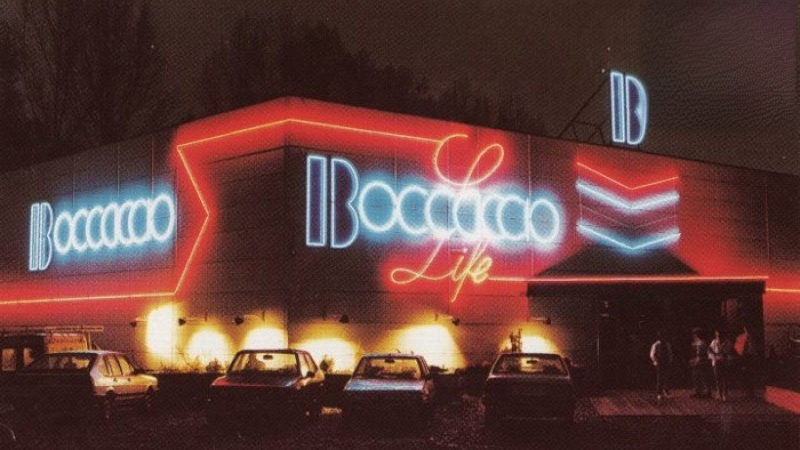
Tracks like Trio Balkana – “Lalala, Kings of Agreppo,” – MSB “In Action,” and Explorers of the Nile – “We Are All Egyptians” had a warm, Boccaccio-tailored vibe.
Musical Roots, Inspirations, and Allies ::
What were your musical influences?
Yello, Pet Shop Boys, Fad Gadget, Coil, Coldcut, Renegade Soundwave, Dead Can Dance, David Sylvian, The The, Leonard Cohen, The Cure, Neil Young, Lou Reed…
Jo was into both heavy underground and singer-songwriters—he introduced me to a lot. I started with guitar and blues: The Doors, Jimi Hendrix, Johnny Winter, Neil Young, Pink Floyd, Supertramp, Lou Reed, Vangelis, ZZ Top, Jeff Beck, early AC/DC. The first Simple Minds records still sound amazing.
Also: The Beatles, Steely Dan, Weather Report, ambient music… too many to list. PIL, Soft Cell, Human League, Visage, Depeche Mode, 10CC, The Police, Prince, Andrew Eldritch—the sound of my generation.
Who were the musicians around you that you felt connected to?
Tim Simenon (Bomb the Bass), Front 242, Neon Judgement, The Weathermen (KPW), Telex, T99, Luc van Acker, Arbeid Adelt… anyone who dared to challenge boundaries.
New Beat: Movement or Myth? ::
Did the term New Beat describe what you were doing?
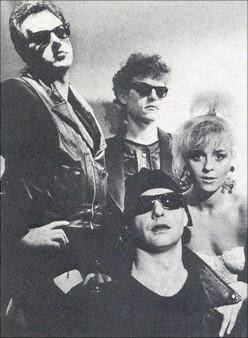
When “Move Your Ass” came out, I hadn’t heard yet of New Beat (NB). We were experimenting with a wide range of sounds—from the raw and edgy (In Sotto Voce) to the exotic, including Balkan, Afro, and opera influences. Our music was far less repetitive and minimalistic than the NB label might suggest. On the other hand, I kept the tempo’s close to the slow 111 Bpm, you could dance on it all night, and the sound system gets more space in time to transfer the low end sonic energy. The basses had to be felt vibrating thru the body. Working to that on purpose was an evolution, parallel with the dub scene.
MSB were the first to score hits on the Subway label with “Erotic Dissidents” and “Taste of Sugar.” The album New Beat – Take 1 scored platinum. We are (among others) credited as the founders. I see myself more as pioneering alongside the creators of acts like Code 61 (“Drop the Deal”), Amnesia (“Ibiza”), Vicious Pink (“To Nowhere”), and “Pump Up the Volume.” It shows how relative dance music was in that era. You could also describe MSB as a joke that went out of hand. Eventually Billy Ocean and Samantha Fox wanted to work with us—what would such artists look for in New Beat? Our releases covered a much wider musical spectrum.
New Beat: Label, Legacy, and Misconceptions
New Beat was initially an alternative media phenomenon. We never liked being pigeonholed to it, because that wasn’t the full story. Although “Move Your Ass” climbed high in the charts, it was banned from national radio. It frustrated me that the provocative things we did, sold more at the time.
What later became known as “New Beat” lived in disco’s like Paradise and Boccaccio, but describes a nightlife and clothing rage that suddenly everyone wanted to be part of.
Mainstream media often dismissed New Beat as unmusical. Still, its success with club-goers—and its unexpected international reach—was a first for Belgium, then a relatively anonymous country musically. That success triggered jealousy and disdain from other musicians, even now it’s still sort of taboo to recognize the significance of it. More open-minded artists, like 2 Belgen, jumped on the bandwagon as the scene grew. A lot has changed since the late 80’s. It is long enough in the past to get the mythical status, especially for those who didn’t experience it.
How Long Did New Beat Last?
For me, it never really ended. The term “New Beat,” used to describe Belgian electronic dance music with slowed-down, wavy beats at around 111 BPM, eventually fell out of fashion, but I can’t point to a clear end. Tomorrowland still looks comparable to me: escapism, individual extravagant outfits, only a lot more expensive shows, way faster BPM’s, and specifically a DJ thing.
The culture around it—especially the club scene—spread internationally. That said, the music often became flatter in quality. Examples like Booming Support – “De Rode Schoentjes,” Plaza – “Yo-Yo,” or Jordy – “Dur dur d’être bébé” come to mind. Yet better material emerged elsewhere, like Underworld – “Born Slippy” or KLF – “What Time Is Love?”
In Detroit, house music was rising around the same time, though at much higher tempos, often using 808, 909 drums. What we now call EDM was still a novelty in 1988, and Belgium was among the first to embrace it so massively in nightlife. The movie The Sound of Belgium (TSOB) and the VRT documentary on New Beat paint a vivid picture of that time.
The Decline of New Beat
So what killed New Beat? Simply put: oversaturation. Soon, everyone could create it, and little of it was good.
The media’s portrayal didn’t help either. VTM, in particular, leaned heavily into the drug stereotype, ignoring the dreamlike, escapist world New Beat actually was for many clubbers.
Drugs, of course, are timeless and present across genres—but personally, I never saw nor touched them, not even in the solitude of my basement studio.
Musical Identity: What Was New Beat Made Of?
Musically, New Beat was a mix of several styles: electronic body music (EBM), new wave, hi-NRG, acid house, and even hip-hop.
EBM was certainly its core. At the time, despite the popularity of 80’s synth-pop, electronic rhythms were still taboo for many musicians and critics.
But we pushed on. The screaming TB-303 lines that define acid house were also woven in New Beat.
Krautrock’s Influence
Absolutely—Krautrock had a major influence. I danced to DAF, Rheingold, Kraftwerk… their minimalist, repetitive power and hypnosis fed directly into the vibe we were looking for.
The Name: Morton, Sherman & Bellucci
Yes, the name Morton, Sherman & Bellucci was a playful nod to Stock, Aitken & Waterman. That was Jo’s idea. Maybe we dreamed of a similar career trajectory, but we were never close to that level of commercial or professional polish.