


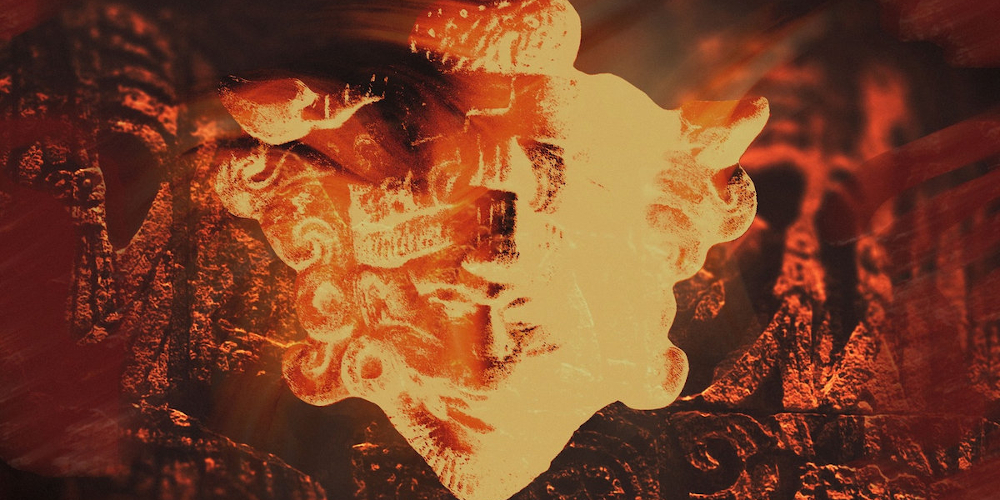



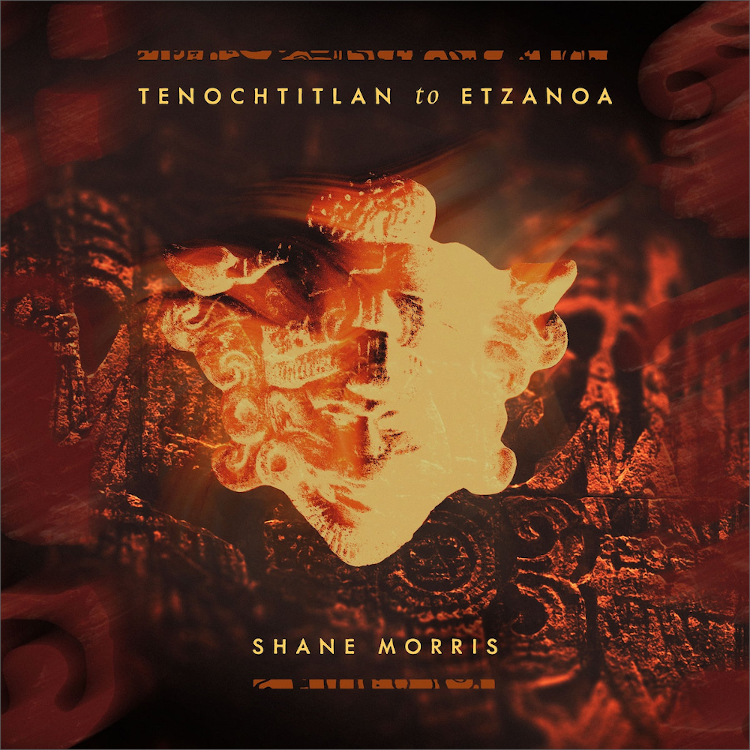
Tenochtitlan to Etzanoa is a mesmerizing sonic odyssey through ancient Mesoamerican and Indigenous American spiritual worlds, weaving ritual percussion, haunting flutes, deep chants, and atmospheric electronics into a transcendent journey where ancestral traditions, cultural connections, and shamanic mysteries echo across time and space.
A Shamanic journey through time
Tenochtitlan To Etzanoa is about a spirit journey from ancient Tenochtitlan, which now is located within Mexico City, to Etzanoa, once found at the confluence of the Arkansas and Walnut rivers, which now is in the state of Kansas. The sound of Tenochtitlan To Etzanoa draws both influence and inspiration from the tribal ambient music of Jorge Reyes, Steve Roach, Carlos Nakai, and Tribu, with ancient, modern and galactic ceremonial vibes. The music is heavily percussion-based, highlighted with vocals, flutes and winds, and atmospheric synthesizers, a journey divided into smaller adventures so as not to overwhelm the senses. The inspiration comes from a fascination with First Nations tribal people of the Americas, cultural exchange and interaction, the evolution of societies over long periods of time, the entheogen experience, the music of native populations of America and Mexico, and the instrumentation that these cultures possess to tell their musical stories over generations.
The call goes out, “Xochipilli” (8:26). At the center of Tenochtitlan, the flower prince spreads consciousness, empathy, and beauty. He is loved by his devoted followers, song and entheogenic mushrooms ring throughout the city. Perhaps this is a soundtrack for a ceremony honoring Xochipilli, god of flowers, art, love, beauty, youth, love, passion, sex, sexuality, homosexuality, fertility, and arts.
A trance is a state where a human spirit becomes hyper-aware of the spiritual realm while its body is in a half-conscious state. Entering a trance state is an ancient and primal practice, opening a door into the spirit realm. Earth, mud and clay are transformed into a vessel of music on track 2, to transport the shaman and the community along the sacred path, “Sacred Clay” (6:19). The drum is not just for rhythm or musical accompaniment, the drum is a guide, a spiritual lumen, that can help the shaman traverse the spirit realm and find their way back to the physical world. This track pays homage to the instrument that provides polyrhythmic music for ritual, enjoyment, and daily activities.
The rhythm of the Deer Dance can be found in many different forms among different tribes, but here we have the basic rhythm found still present today in Central America. The practice of the Deer Dance ritual once could be found from North to Central America. The track “Deer Dance” (7:38) brings song, dance, and prayer to our forest brothers and sisters with praise, honor, and gratitude. I hear shakers, shadows bubbling and lots of percussive instruments being spooky. A flute, ticking metal and odd strange horn calls from the darkness.
The powerful and hallucinatory flowers and plants of the shamanic universe are central to the practice and quest of the shaman and the healing journey, invoked in “Forbidden Flower” (6:32). These plants are forbidden to just eat casually, as they are seen as sacred and not to be used outside of a ritual setting. The flowers have the power to transport the soul into a spirit ecosystem that can augment or detract from our normal lives.
I hear a tuned wooden drum played with mallets, the beats are interlocking into perfect patterns, “Road to Etzanoa” (6:38) is all about the transitions involved in long journeys. Perhaps the ghost is telling us something. I don’t know, There are new roads to explore new things along the way, the chimes represent wind and mystery, brought together with a simple click-clack bamboo tapping machine. The spirit guide energizes the shaman, enabling some to enter the spiritual dimension. “The Shaman’s Dream” (7:16) brings bamboo wind chimes, the congas have entered like an army marching into the haunted cave. The beating of the drum allows the shaman to achieve an altered state of consciousness or to travel on a journey between the physical and spiritual worlds, the ghosts swirl around whooshing and moaning a little. Could some of the echoey voices actually be ghosts or remnants? How were they generated? Are they standing behind me right now?
Tribal ambient meets sacred mysticism ::
“Coyote Drum” (7:48) invokes the Coyote or Trickster spirit which is prevalent throughout many native American tribes. The coyote is known as the trickster spirit that can be both helpful and harmful. The shaman may call upon the coyote spirit for help achieving either of these outcomes. Coyote Drum is a deep hallucinatory trip as we settle in for the final night on our path returning to Etzanoa. The ghosts are here to see us out.
Traversing layers of interplanetary meditation, Shane was way deep into exploring indigenous Mexican music inspired by Jorge Reyes. Then the Etzanoa discovery in Kansas came up and he was amazed by its ties all the way down to the Aztec empire. Now I feel as if I’ve been transported to another place, another time, filled with evocative and mysterious sounds that transfix in my mind, leaving impressions of ancient rituals and sublime deities floating in and out of my own conscious perspectives. My fascination with the serpent god Quetzalcoatl suggests to me a quest for a greater personal understanding of the pioneers.
Jorge Reyes (1952–2009) was a pioneering Mexican musician and composer, famous for mixing traditional pre-Hispanic and Mesoamerican instruments with modern ambient electronic music and progressive rock, combining ancient native instruments like the tunkul, clay flutes, and indigenous percussion with synthesizers and electric guitars to bring about a dark, ritualistic, and atmospheric sound that evoked Aztec and Mayan heritage. He co-founded the progressive-rock band Chac Mool in the late 1970s before going solo into Mexican ambient music, focusing on the diverse culture and history of the Mexican homeland.
Steve Roach (born February 16, 1955) is an American ambient and electronic music composer, his prolific career features more than 80 albums, inspired by the open spaces of the American Southwest desert and is influential in the space, trance, and new-age music genres. Over time, he has blended electronic synthesizers with acoustic and ethnic instruments—such as didgeridoos and Southwestern percussion, creating a style often called techno-tribal or organic ambient.
Carlos Nakai (born April 16, 1946) is a world-renowned Native American flutist of Navajo-Ute heritage, the world’s premier performer of the traditional Native American cedar flute. Originally trained in classical trumpet and brass instruments, his sound combines traditional Native American melodies with new age, jazz, world-beat, and classical music. He has released over 50 Native American flute albums and earned multiple Grammy nominations and a Platinum certification.
Tribu is a pioneering Mexican ensemble that was one of the first to begin playing traditional indigenous Mexican instruments in a modern amplified scenario. They utilize clay flutes, turtle shells, water drums and many more instruments that reflect the natural world and the human connection. Tribu very likely was a big influence on Jorge Reyes and others that came after them like Xavier Quijas Yxayotl and Martin Espino. Shane remembers, “I spoke with Xavier and Martin many times about indigenous Mexican music, Aztec death whistles, and flutes while making the album.” The whole album is a story about distinct cultures, but also the similarities they shared as well.
Tenochtitlan to Etzanoa is about those cultural corridors that reflect these different people in their spirituality, economies, and daily life. A sonic tale of an expedition from two great civilizations that historically were known to participate in a wide-reaching trade economy. Through this trade system, many customs and traditions were shared and incorporated into various tribes including religious ideas, practical tools, raw materials, as well as rhythms and music for the sacred and profane. Tenochtitlan to Etzanoa continues in the tradition of the soundworlds first created by Jorge Reyes and Steve Roach in the 1990’s merging tribal ambient sounds with shamanic themes, eight tracks of ritual poly-rhythmic drumming, flutes, and deep chanting with a modern ambient underside that radiates an entheogenic glow of an ancient time that still influences our lives to this day.
Tenochtitlan To Etzanoa is available on Spotted Peccary Music. [Bandcamp]







![Andreas Tilliander :: Ljud [2026 Remaster] (Keplar)](https://igloomag.com/wp/wp-content/uploads/2026/10/andreas-tilliander-ljud-remaster-vinyl-75x75.jpg)